Cultivating Knowledge
There are plenty of opportunities to learn about food and connect with nature at the Agroecology Education Farm this fall, including Harvest Fest on Oct. 24.

On a clear, warm Wednesday evening at the Agroecology Education Farm, Rachel Raineri sat with a friend at a picnic table. Before her was a mug of tea made with newly harvested lemon balm, mint and Thai basil. She stirred it and took a sip.
“Herby. Fresh,” she decided.
Raineri, a research and development project manager in the Wilson College of Textiles, was one of some three dozen people who attended the farm’s tea workshop earlier this month that demonstrated how to turn herbs and spices into refreshing brews. A crate of knobby pieces of fresh ginger and turmeric sat next to bowls of dried chamomile and rosehips in the farm’s covered pavilion. A whiteboard displayed the health benefits of different types of herbs: lemongrass to strengthen immunity, basil to reduce stress and shisho to relieve allergy symptoms.
“It was so nice to just go out there and see all the grasshoppers and bees and all the plants,” Raineri says. “Touch them, smell them, feel them. And then drink them right in the cup.”
The tea workshop is one of many opportunities to spend time at the farm. It holds workshops to create kimchi, flower-pressed bookmarks and other goods; yoga classes; regularly scheduled volunteer days; and big events such as the upcoming Harvest Fest on Oct. 24.
Above all, it is a place people go to learn.
“I always tell people we’re an education farm, so people at NC State are our audience,” farm manager Sara Snyder says. “The farm exists to serve NC State, and so I always want people to think of it as their farm. I’m mostly here to carry out what people are interested in seeing, learning and doing.”
‘A Lot of People Power’
The farm grows about 50 different types of fruits and vegetables over the school year, most of which goes to NC State Dining. Along with staples that include watermelon, potatoes and eggplant, the farm provides specialty items grown for educational purposes, such as foot-long red noodle pole beans that are native to China. Fruits and vegetables that the dining halls don’t use often find their way to Feed the Pack Food Pantry.
“There are a lot of international students who use Feed the Pack,” says Snyder, who uses the pronoun they. “Sometimes our more uncommon produce for the dining halls is well-received at Feed the Pack because they’re like, ‘Oh, wow, we haven’t been able to find this anywhere else.’ It is nice to have Feed the Pack as an outlet for those exceptions that are a little bit more education-focused, but then we’re still able to move the produce so it doesn’t go to waste.”
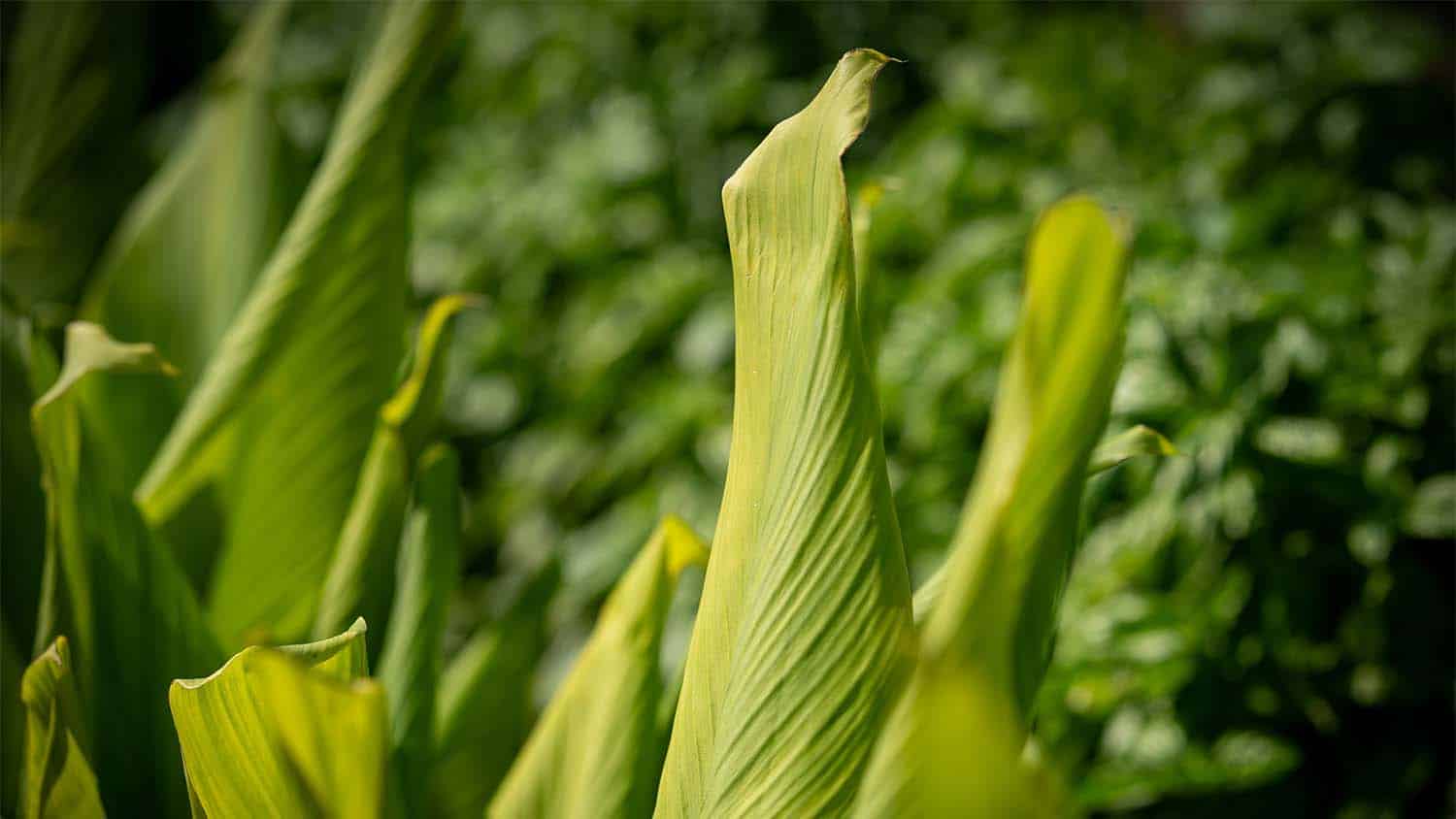
The farm grows more than 10,000 pounds of produce a year on just 1.14 acres. Snyder uses a technique called market gardening where three or four crops rotate through the growing space in a year. Because the farm uses small equipment, there’s no need to sacrifice growing space for large tractors or other machines to maneuver.
“We manage the space very closely, so we’re able to produce a large amount in a small amount of space. And we do that with a lot of people power,” Snyder says.
The farm saw about 2,500 visitors last year, about one-third of whom were volunteers. Tasks for them include harvesting crops, seeding trays and painting signs for plant beds.
“There’s always work to do at the farm, and we can find ways for people to help, even if they aren’t the most mobile,” Snyder says. “Right now we are preparing a lot of beds for fall. We have baby bok choy, baby kale and carrot seeding ready to go in the ground. We have our summer crops that take a lot of work to harvest.”

Experience isn’t necessary to volunteer, and Snyder expects mistakes. One student sent to harvest kale returned with a bunch of cauliflower leaves. Another pulled up a crop of underripe watermelons instead of getting rid of old rotting ones. Snyder takes it in stride.
“That’s part of an education farm, and that’s why we wouldn’t be profitable,” they say. “But that’s not necessarily our purpose; our purpose is to educate, so our farm is geared toward that. It’s geared toward people with a very beginner-level knowledge of farming coming out and being able to use the space. I’m not going to ask visitors to do anything that I’m going to resent them for doing wrong.”
Harvest Fest
Snyder is gearing up for Harvest Fest, what they consider “the funnest day to be at the farm.” It’s a day designed to educate as well as entertain.
There will be craft stations, including carving and painting pumpkins from the farm’s own patch. A chef from NC State Dining will do a cooking demonstration using the farm’s produce. Snyder hopes there will be a soil pit where visitors can see and learn about the different layers of soil — a popular draw last year, especially for children who didn’t mind getting dirty. There might even be a little make-your-own-tea workshop for visitors who couldn’t attend the one earlier this month.
“It’s a great family-friendly event, which is nice for faculty and staff who might have children and want to come out and have fun on the weekend,” Snyder says. “We try to make it open to everyone.”

Harvest Fest shows first-time visitors all the farm has to offer. Snyder hopes newcomers leave with a greater understanding of the farm’s purpose and agroecology in general — plus maybe an interest in returning.
“I like for them to understand the bigger picture at NC State,” they say. “NC State’s invested in this farm as an investment in local food and providing that for its students. I want them to take away community — being outside helps you connect with people, helps you connect with nature, connect with yourself. And I would say lastly, but maybe most importantly, we are an agroecology education farm, so I’d love for them to go away with some really basic understanding of sustainable agriculture.”
Raineri can’t make Harvest Fest this year, but she has done yoga classes on the farm and volunteered there when she was an NC State student a decade ago. She says the farm is a great place to be.
“I love natural stuff, and I love the farm,” she says. “Any time I see an event at the agroecology farm, I perk up.”
- Categories:


