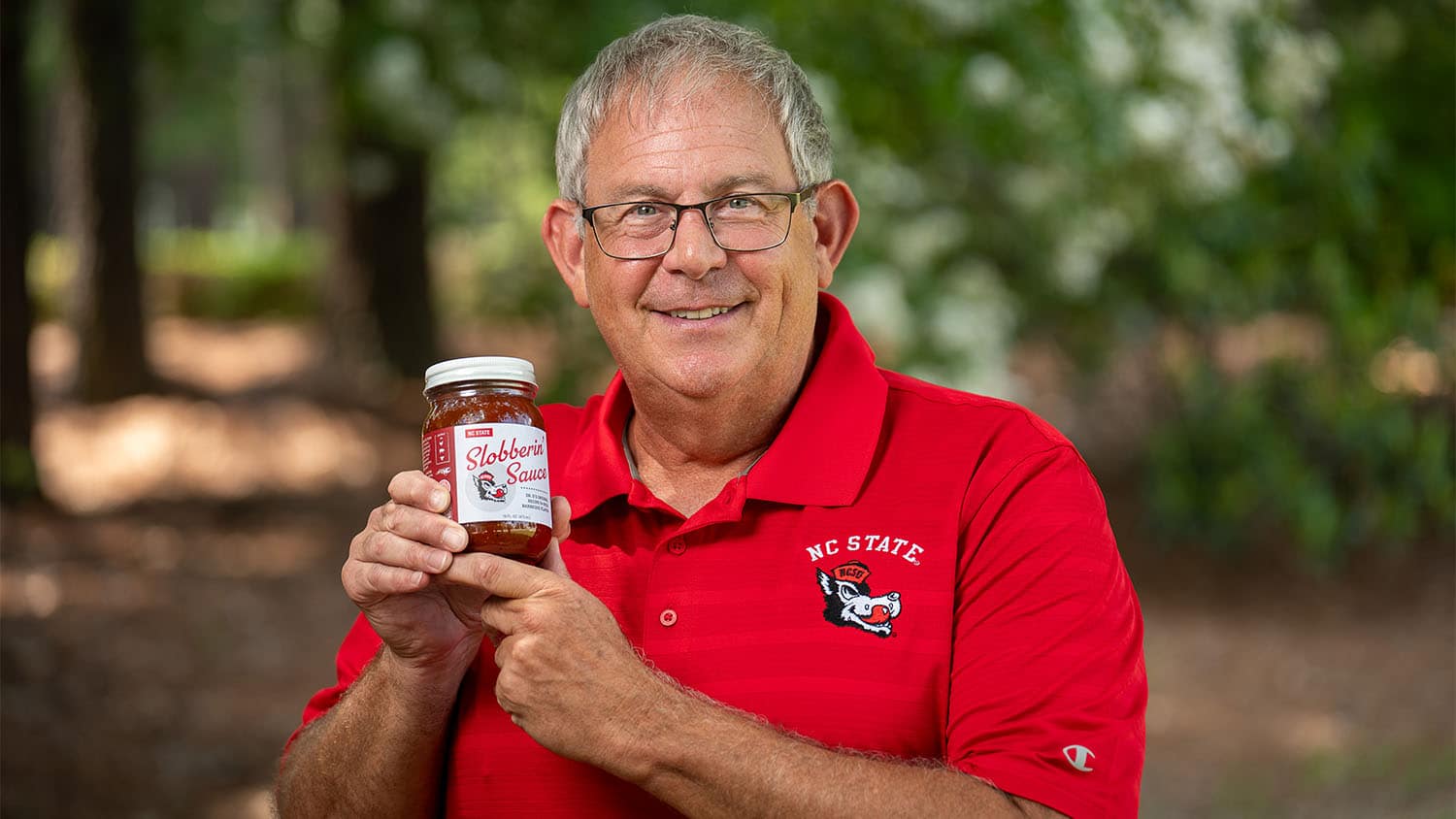
From LARPing to Lighting: Meet the Keeper of the Belltower
Live-action role-playing taught David Bliss how to solve problems creatively, a necessary skill in his job as NC State's building technology systems manager.

Before David Bliss became keeper of the Belltower, he played another role — hundreds of them, in fact — as a professional live-action role-player.
For the uninitiated, a live-action role-playing (LARP) game is similar to such role-playing games as Dungeons & Dragons or World of Warcraft, but instead of playing at a tabletop or in front of a computer screen, LARPers act out their fictional, fantastical adventures in real life, complete with props, costumes and side quests. As the owner of a LARP gaming franchise, Bliss wrote the stories for the games and prepared everything needed to bring them to life.
The best games, the most engaging ones, are those that take players through a maze of tasks and challenges to reach the larger end goal, Bliss said. His love for creating and solving intricate puzzles makes him especially good at resolving the complicated issues he runs into in his role as building technology systems manager with NC State’s Facilities Division, whether it’s trying to fix a broken clock on the Belltower or updating a malfunctioning lighting system.
Bliss’ journey to becoming keeper of the Belltower was hardly linear. He might not be in the role today if the lights in Hunt Library had been working properly five years ago.
During final exams in spring 2021, the library was open 24 hours a day so students could study. However, one night the lights started turning off randomly, and they wouldn’t come back on. Bliss, who joined NC State in 2018 as a facilities automation engineer and controls shop supervisor, discovered that the problem stemmed from a communication issue between the building’s climate control system and its lighting system, which were scheduled to turn on and off together depending on the library’s hours.
“They were still talking the same protocol, but no longer quite the same, like Guatemalan Spanish versus Mexican Spanish,” Bliss said. The lighting system would reboot itself whenever it got confused, which turned the lights off, but it wouldn’t receive a signal to turn the lights on again, so the building would stay dark.
Bliss figured out a workaround that involved telling the lighting system the building was on fire. It wasn’t, of course — no fire, no alarms, no danger. But if the lighting system is told the library is on fire, it won’t turn the lights off for anything.
“That’s one of the weird ways I solve problems,” Bliss said.
His involvement with the Belltower came about as a result of being asked to solve another problem. Around the same time Bliss got the lights working in Hunt Library, renovations of the Belltower had just been completed, and the university was preparing to light the iconic structure red for the first time since fall 2019. The fully refurbished Memorial Belltower at Henry Square featured restored granite and marble, an upgraded electrical system and 55 brand-new bells, but part of its exterior lighting system had been removed. Bliss was tapped to troubleshoot. He found the tower’s blueprints and manuals and experimented with the controllers until, with the push of a button, the Belltower was bathed in Wolfpack Red.
Since then, Bliss has maintained all technical and logistical aspects of the Belltower. This includes managing a web interface that the athletics department and Facilities Division use to light the tower red when the Wolfpack wins major victories or academic awards. He also carries one of two master keys to the Belltower, and he keeps track of the dozen or so standard keys in the possession of facilities workers and tour guides. Additionally, he regularly sets the clocks on the tower’s four faces since three of them fall behind by about a minute a week. The fourth clock, on the tower’s north face, needs more maintenance; the gears have worn down and can no longer keep the clock’s hands in time with, well, time. Bliss has been collaborating with engineering students and faculty members to find a more permanent solution.
When Bliss is working on a problem, he can reach a flow state where he feels “a sense of rightness,” he said. It’s similar to how he feels when creating a complex story for a LARP game.
“If I’m working an engineering problem, or I’m trying to find out why a building’s behaving the way it is or trying to find a way to save on our utility bills, I will churn on that,” he continued. “I will have whiteboards up. I will have scrap notepads where I’m jotting ideas. I will keep a notepad next to the bed. Eventually it’ll come to me, like: ‘You could do this.’”


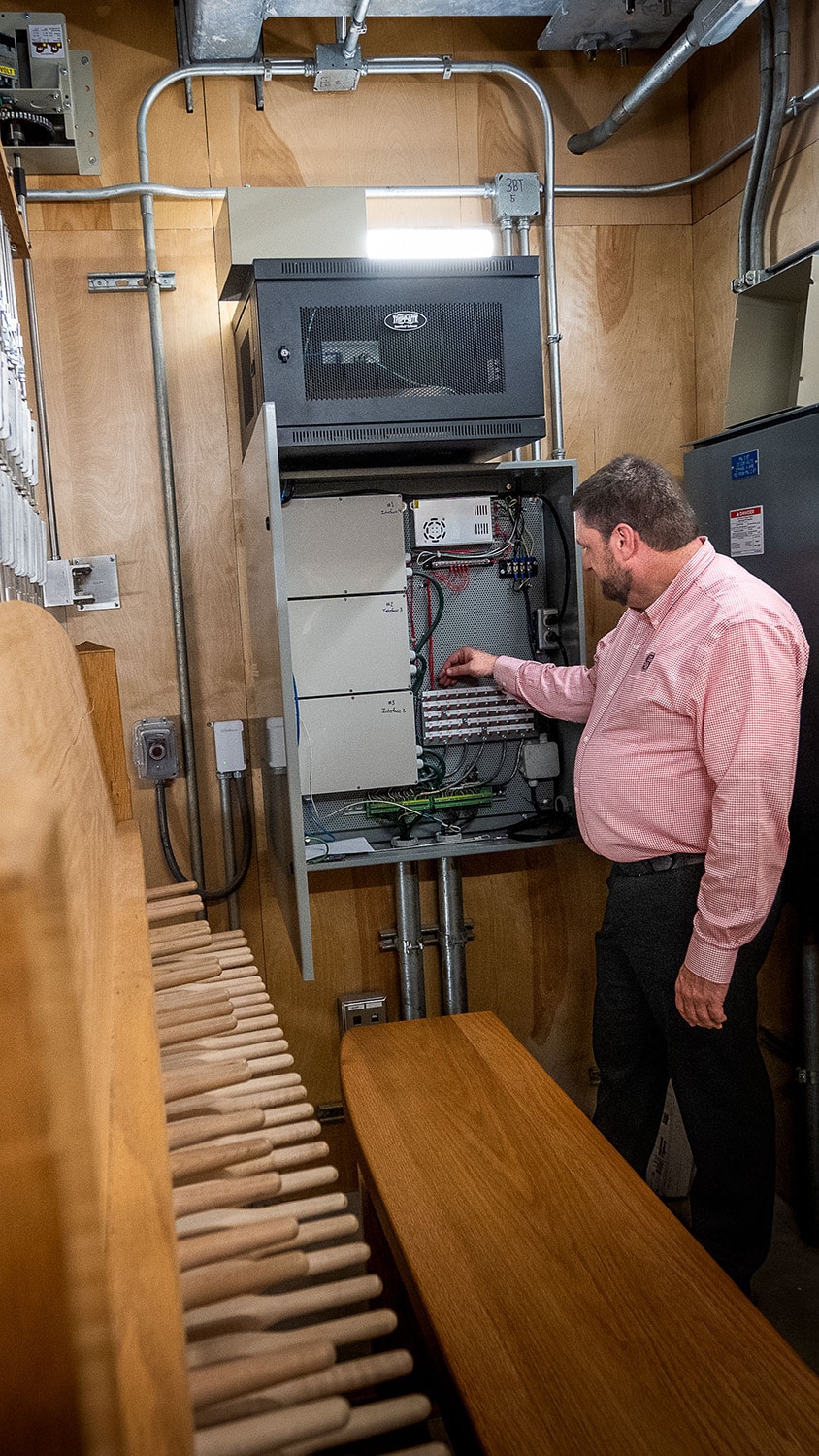
Bliss’ full-time job is much bigger than caring for the Belltower. As the building technology systems manager, he oversees the university’s heating, ventilating and air-conditioning systems and lighting controls. This means he’s had to fix broken ventilation systems in laboratories and broken stadium lights at Carter-Finley right before a football game. After Hurricane Helene hit western North Carolina in 2024, he and a team of colleagues traveled to research stations across the state to repair air handlers and power systems.
His job also includes future-proofing mechanical technology across campus by monitoring new technology, such as artificial intelligence, and preventing the university from using obsolete technology. To stay even further ahead of the game, he enrolled in NC State’s Master of Engineering Management program, which trains students to oversee the technical and workforce sides of engineering organizations. Bliss already oversees 29 employees in the Facilities Division, but his degree, which he earned in May, empowers him to take his leadership skills to the next level.
“I find myself leading larger numbers of people, usually in technical areas,” he said. “The master’s of engineering management is about leadership and teaching engineering. I want to be a better leader.”
“I want to be a better leader.”
Even after solving countless technical problems, working his way through grad school and being put in charge of one of NC State’s most recognizable landmarks, Bliss says he still sometimes feels imposter syndrome. He wonders whether he belongs on a project or in a room with other leaders.
But he’s been a professional LARPer and has played countless characters. He’s developed the creativity that makes him a good problem-solver — and the confidence that comes from knowing how to bring a role to life.
“I think everybody has imposter syndrome at some level,” he said. “LARPing allows me to be able to say, ‘I feel like I don’t belong here. But David Bliss, the engineer, he belongs in this room.’”
- Categories: