To Inform and Inspire: The Research Lightning Round
In a series of fast-paced presentations, the Research Lightning Round showcases the broad spectrum of research happening across NC State. For the 2026 session, themes explored innovative narratives, how dynamic data strengthens important systems and the research breaking boundaries.

Each year at Research Week, an exciting lineup of faculty presenters share their work in five-minute talks in an event called the Research Lightning Round. These dynamic presentations offer fresh insights, opportunities for interdisciplinary connection and inspiration for future collaboration.
Hosted by the Research Leadership Academy and the Office of Research and Innovation (ORI), the Research Lightning Round highlights NC State’s wide breadth of research across campus — how we Think and Do.
Research Week at NC State is an annual, campuswide event of conversations, showcases and programs sponsored by ORI and campus partners. The event connects faculty, staff, students and university leaders to the people, ideas and resources advancing research at NC State.
The Power of Narrative

The Lightning Round opened by examining how storytelling drives community connection and business success.
Topher Maraffi of the College of Design described a research project where students in the Department of Media Arts, Design and Technology collaborated with the Historic Mitchelville Freedom Park to produce virtual reality tours highlighting local history. Now a heritage site on Hilton Head Island, South Carolina, Mitchelville was the first self-governing town of formerly enslaved Gullah-Geechee people in the eastern United States during the Civil War.
- Presentation slides: Virtual Production and Digital Humans, MADTech
Focusing on the power of creative expression, Angela Wiseman of the College of Education presented the Literacy and Community Initiative, a research-practice partnership focused on literacy education and the well-being of youth experiencing multiple types of marginalization. Monthly sessions with community-based organizations include writing and art sessions, creating spaces where the attendees explore self-expression.
- Presentation slides: Literacy and Community Initiative: Trauma-Informed and Arts-Based Learning in a Community-Based Organization
Shifting to strategic management, Elena Kulchina of Poole College of Management explored the role founders play in new startups. Entrepreneurs can manage a firm or hire a manager and take a more secondary, non-managing role — a decision that seems to impact why some startups don’t last.
- Presentation slides: The Role of Founders in Young Startups
Data to Deepen Understanding

The Lightning Round also focused on how dynamic data and improved modeling enhance human understanding across ecosystems, computing, behavioral science research and governance in higher education.
Josh Gray of the College of Natural Resources explained how lidar’s vertical laser imaging can be used to map environments from the forest floor up to tree canopies — and when combined with trail camera footage, it can provide a more complete picture of how wildlife interacts with ecosystems. Layering in additional types of mapping allows researchers to create robust and dynamic ecosystem models, helping them understand why mammals choose certain habitats over others.
- Presentation slides: Birds’ Eye Views: Measuring Near to Ground Habitat
Chao Chen of the College of Sciences discussed how introducing randomness into large-scale mathematical calculations in computational research can speed up processing without sacrificing accuracy. Currently, when a standard computer tries to solve calculations for large-systems data, it usually cuts corners. Chen explained that incorporating randomness into calculations, while keeping certain properties intact, can lead to faster and more efficient problem-solving problems faster in conventional computing.
- Presentation slides: Using Randomness to Make Big Computations Faster and More Reliable
Addressing underutilized data, Shevaun Neupert, a professor in the College of Humanities and Social Sciences, introduced a new publicly available metadata catalog of behavioral and social science research. By organizing decades of long-term data from understudied groups — such as veterans and breast cancer survivors — the catalog empowers researchers across ranks and disciplines to access rich insights into biological and psychological health.
- Presentation slides: Consortium for Longitudinal Behavioral and Social Science Data Integration and Coordination (CLASSIC)
Kirsti Cole of the College of Humanities and Social Sciences presented research on supporting faculty and administrators to make better policies on AI’s place in higher education. The research has created a framework that helps educators better define and discern different systems of AI, the data they use or omit, and what uses they serve — as well as what limits should be placed on them.
- Presentation slides: What Counts as AI Literacy? What We Need to Know, Examine and Decide
Expanding Boundaries

The talks also highlighted research that’s breaking boundaries in areas of ocean energy, cellular biology and fusion power.
George Bonner, director of the North Carolina Renewable Ocean Energy Program at the Coastal Studies Institute and faculty member in the College of Engineering, detailed a decade of research into marine energy. Collaborating across disciplines, Bonner’s team harnesses wave and tidal power for commercial and national security applications — supporting coastal resilience, powering island communities and driving innovations like wave-powered water desalination systems.
- Presentation slides: Marine Energy: Power at Sea Technologies
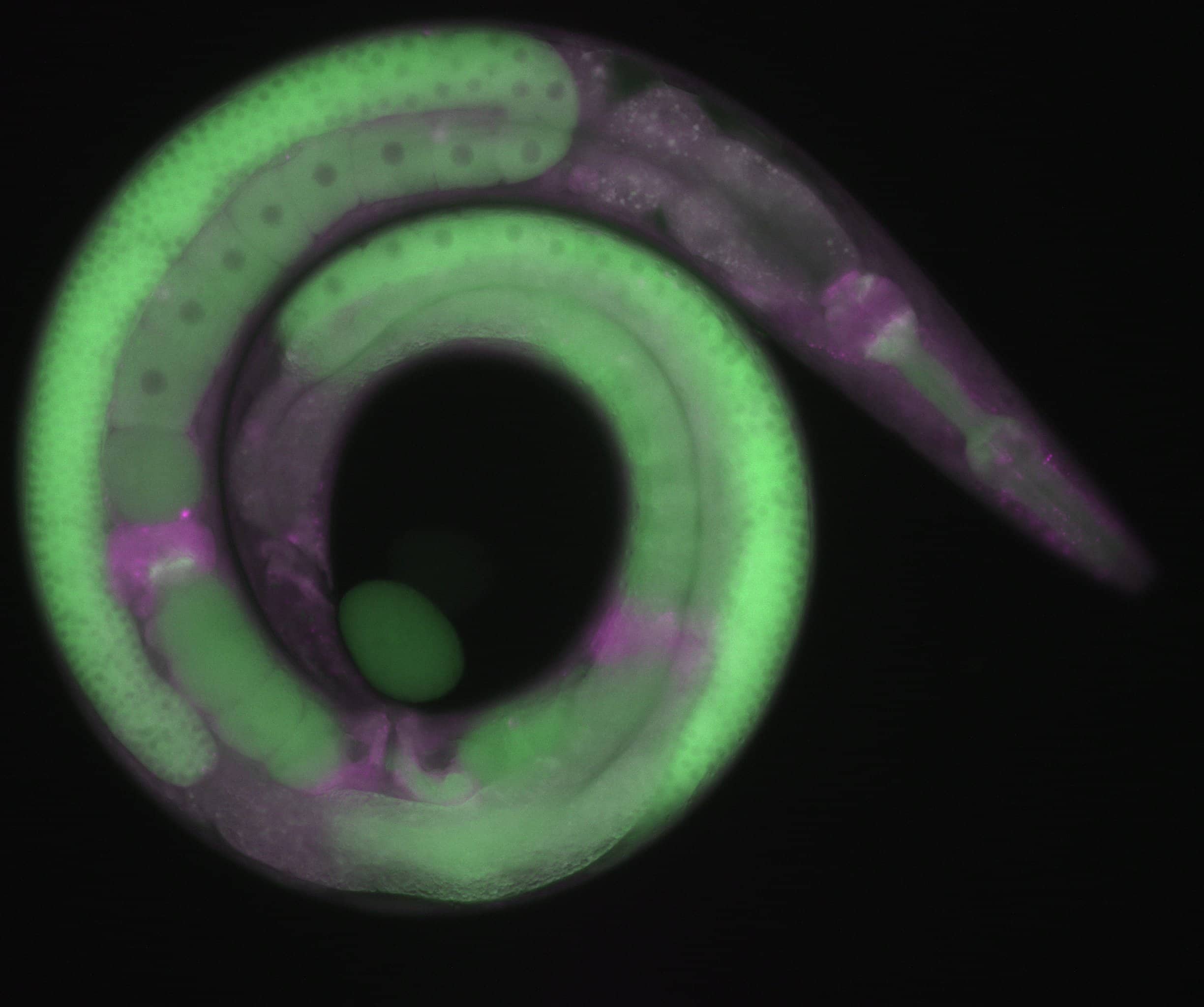
Orlando Arguello-Miranda of the College of Agriculture and Life Sciences discussed how generative AI can be a powerful tool in cellular biology. Researchers in this field are using it to create algorithms that help them better track and understand how cellular microorganisms behave. It’s possible that generative AI will one day become just as useful as microscopes in understanding cellular systems.
- Presentation slides: New Biological Principles at the Edge of Reality
Concluding the event, Florian Laggner, an assistant professor in the Department of Nuclear Engineering, shared progress from the Fusion Plasma Auxiliaries Characterization Laboratory — or FPAC Lab, for short. The research develops and tests the heating systems, diagnostics and other critical components needed to create and sustain fusion plasmas — the energetic reactions of stars. The work is a collaborative effort with industry partners and NC State to advance the global pursuit of a continuous, carbon-free source of energy.
- Presentation slides: The Fusion Pack: Bringing Star Power to NC State
- Categories:


