Worth the Squeeze
A spinout company with deep ties to NC State launched its first in-house product line this year — leveraging IP that a professor and her former grad student have been developing for over a decade.

It’s no secret that fruits and vegetables are good for you. Most of us were regularly reminded to eat them as kids.
Regardless of how old you are, though, you’ve probably never been taught that the human body isn’t made to take full advantage of these nutrient-rich foods.
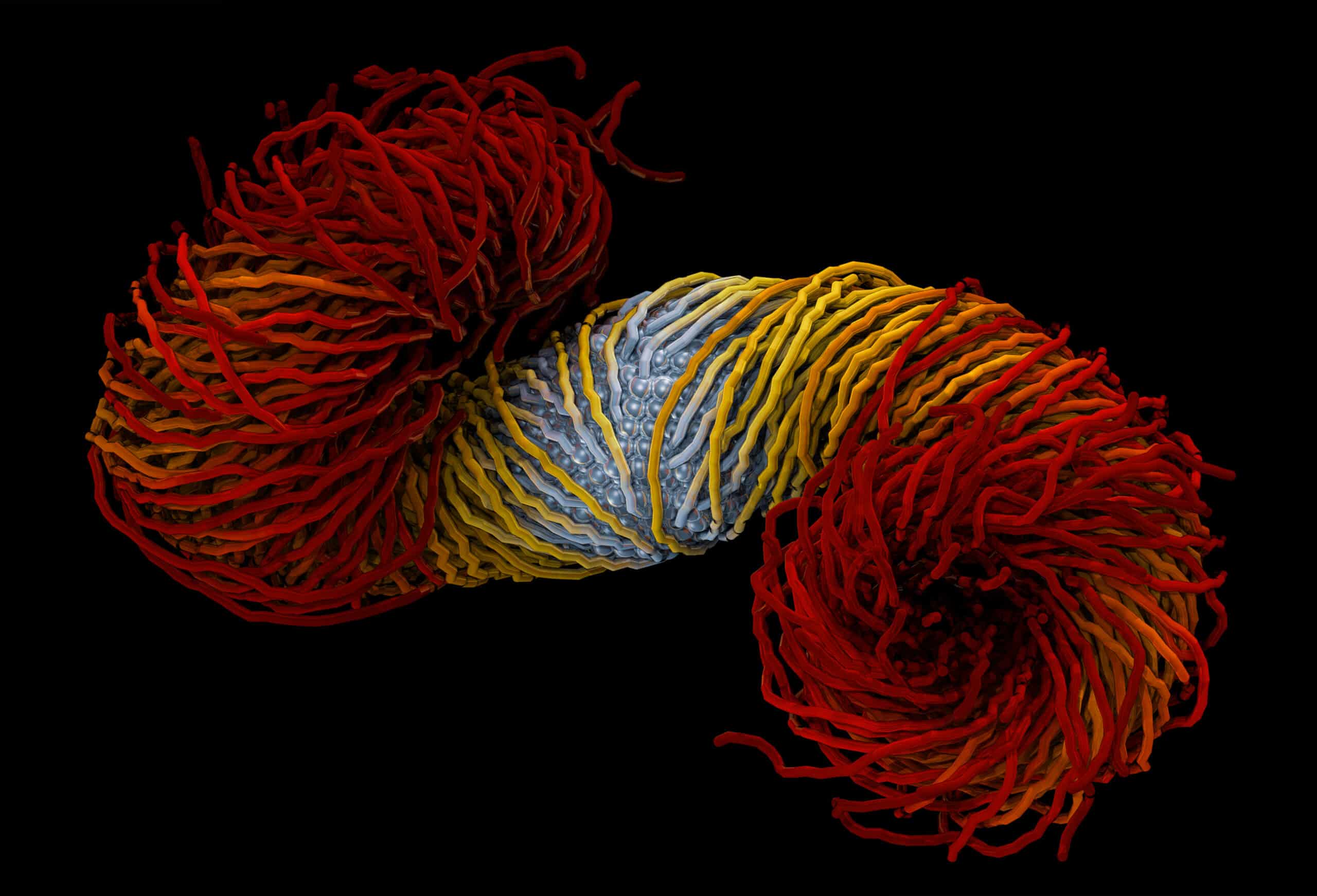
Polyphenols, a class of bioactive chemical compounds found in berries, broccoli, and many other plant-based foods and beverages, often get destroyed by our digestive system before they can be absorbed into circulation. That’s because polyphenols are sensitive to the changing pH levels throughout the gastrointestinal tract.
“Most of the ‘good stuff’ never gets into your bloodstream,” says Mary Ann Lila, the David H. Murdock Distinguished Professor in the Department of Food, Bioprocessing and Nutrition Sciences at NC State University. “Only a small fraction of those bioactive compounds successfully make it all the way down to the colon, where they can be catabolized by gut bacteria into smaller molecules that do get absorbed into circulation.”
Researchers like Lila have long known that a protein coating can protect polyphenols from stomach acid and other harsh conditions of the digestive system.
“They’re food ingredients, but they don’t occur together in nature. When you complex these active ingredients — those flavonoids and polyphenolic compounds in a fruit — with a protein, it encapsulates and protects it,” explains Lila, who served as the director of the Plants for Human Health Institute from 2008-2024.
“It makes it so much more stable in the human body, so it’s going to get down where it needs to be to turn into phenolic metabolites, get into the bloodstream, get up to the brain, and get everywhere it needs to go for health.”
Discovery is one thing, though. Making and selling a new food product that broadly appeals to buyers’ taste buds is entirely different — and can be much harder to do.
And until recently, nobody was bold enough to try pairing polyphenols with protective proteins in a product for the consumer market.
Then, last spring, Noora Blends — a startup company launched by NC State alum Amanda Vargochik and Nathalie Plundrich, one of Lila’s former graduate students — decided to take on the challenge. Their new startup sells a line of nutritional, fruit-flavored purees that pack plentiful nutrients into a small, squeezable pouch.

While Noora Blends is still less than a year old, Plundrich and Lila have been working on the secret ingredient behind their startup’s new superfood — a patented protein-polyphenol technology they’ve dubbed VITERO, which binds naturally occurring antioxidant compounds found in fruits and botanicals to food proteins — for nearly two decades.
Soon after Plundrich completed her master’s and Ph.D. under Lila, from 2012-2018, she joined the NC State research-based startup company SinnovaTek, which was founded in 2015.
“When I graduated and started working for SinnovaTek, one of my main roles was to continue the research and development of that technology,” Plundrich recalls.
From the beginning, former SinnovaTek CEO Michael Druga says they pitched the protein-polyphenol technology to other companies.
“We’ve been trying to promote and encourage somebody to use this ingredient technology for years and years, just waiting for the right product to come along,” says Druga, who stepped away from his CEO role with SinnovaTek to work on Noora Blends. “The second we started with the idea of making our own product, it was a given it would include this technology.”
There are a number of reasons why others might have decided to turn the opportunity down; in Lila’s experience, when it comes to major corporations, the underlying problem is too many layers of bureaucracy.
Whenever Lila gives an international talk, for example, she says scientists from Fortune 500 companies often express interest and excitement — only to, presumably, have the idea shot down when they bring it back.
Lila says it’s the flatter organizational structure of lean startups like SinnovaTek and Noora that provides a real advantage.
“It’s the novelty of the ingredients that made it hard for someone else to bite. In a big company, you have to sell the idea to management, who often don’t understand. So it never goes up the ladder,” Lila says. “It’s the fact that Michael and team are so nimble as entrepreneurs that makes this possible.”

Breaking Ground (Literally and Figuratively)
Part of the problem many food startups face is finding a packager to partner with. Noora didn’t have that problem, though, thanks to FirstWave Innovations.
“We’ve made hundreds of products for other people and watched them grow and flourish. And this was our first opportunity to really step away from the manufacturing and focus on the brand and the product this time around, leveraging what we built before,” Druga says. “But everything we do is with SinnovaTek and FirstWave.”
FirstWave spun out SinnovaTek and its subsidiary Sinnovita, which were both founded by Druga; Josip Simunovic, a research professor in the Department of Food, Bioprocessing and Nutrition Sciences; and Amanda Vargochik, who completed a master’s in food science at State, with both Lila and Simunovic on her advisory committee.

“The cool thing about the food science department at NC State is there are all of these unique technologies happening,” Vargochik says. “And when these cool technologies exist, they need to be pushed out into the market — not just be cool for being cool’s sake.”
Vargochik, Druga and Simunovic founded FirstWave roughly a year after NC State’s Office of Research Commercialization helped the team form SinnovaTek — which itself was a product of a successful research project supported by the Chancellor’s Innovation Fund.
What began as a small operation off Raleigh’s Atlantic Avenue quickly turned into a 62,500-square-foot manufacturing facility in Middlesex, North Carolina, that today employs more than 70 full-time workers.
SinnovaTek and its subsidiary FirstWave specialize in running relatively small batches of foods and beverages for nascent startups. It wasn’t long before FirstWave found its niche in packaging a variety of foods in small, squeezable pouches.
How it packages products largely hasn’t changed. Pouches still predominate FirstWave’s production lines, but these days, the plant pumps out a whole lot more of them, for a wider range of customers.
The Middlesex plant, which opened in 2023, currently packages roughly a quarter-million pouches a day — or about 62 million per year. FirstWave not only manufactures Noora Blend’s nutrition-filled pouches but also packages products for around a dozen other businesses, both big and small.


Squeeze Pouches’ Surge in Popularity
When they first hit the market, handheld squeeze pouches were largely made for infants and young children. The only foods you’d normally find in squeeze-pouch form were products like applesauce or puréed peas.
Since then, squeeze pouches’ portability has helped them gradually attract more and more adults, especially among athletes and others who are always on the move.
“One of the biggest selling points of this product is its on-the-go convenience, because it’s shelf-stable,” Druga says. “You can have it while you’re biking, jogging, working out, or in yoga studios and Zumba classes. You literally just grab it and squeeze — and you don’t even have to stop moving.”
Vargochik met a woman at a trade show who was particularly excited to see “a shelf-stable pouch format geared toward adults and an active community.”
“She said normally she just puts baby food in her fanny pack and takes it with her because she knows it’s going to be safe six hours in and it has fruits and vegetables in it,” Vargochik recalls.
Noora is selling its nutritional pouches in six brick-and-mortar stores at the time of this writing, with plans to reach more shelves soon. The company’s pouches are also available on Amazon and can be purchased directly from Noora’s website.
Enduring Effects of Early CIF Support
In 2012, food science professor Simunovic applied for the Chancellor’s Innovation Fund, a competitive internal seed funding program that was then only in its second year. Simunovic became one of that year’s six annual winners, securing funding and support for his microwave processing technology.
Microwave processing — known in technical terms as “continuous flow microwave pasteurization and sterilization” — is a type of aseptic processing, a system for quickly heating and packaging food products in a sterile environment.
Using the same kind of energy as the microwave in your home, Simunovic’s patented technology can evenly cook thick, viscous foods with indirect heat — resulting in products that retain more nutrition and flavor.
Simunovic’s technology remains in use today. The IP licensed from NC State by SinnovaTek’s subsidiary FirstWave, which continues to pasteurize a plethora of products before packaging them on behalf of other brands — all starting with a machine that the CIF helped bring to life more than a decade ago.

“SinnovaTek’s still doing great. They’ve got several new lines installed, and I think they’ll be well north of $10 million in revenue this year, and continuing to climb from there,” Druga says. “They’re continuing to really do well, mostly through FirstWave, and have switched almost all their energy into the manufacturing plant now — using the NC State technology, rather than trying to sell it. And they’ve found a lot of success in that.”
Given how successful their first ventures had become, Druga and Vargochik decided it was time to finally pursue a dream they’d had since the beginning.
“Amanda and I took that opportunity to step aside and do something different. And we’ve always had this dream of having our own product,” Druga says.
Just because Druga finally has his very own product to promote, though, doesn’t mean he’s done inspiring and empowering other fellow — and future — food entrepreneurs.
Last spring, right around the same time Noora’s nutritional pouches hit the market, Druga served as a guest lecturer for a brand-new series of courses offered by Fernanda Santos, an associate professor in NC State’s Department of Food, Bioprocessing and Nutrition Sciences.
While the Poole College of Management offers plenty of entrepreneurship-related courses, Druga says this marked the first course catered specifically for food entrepreneurship, which is “very different.”
“Food entrepreneurship has a lot more complexity and a lot more regulatory aspects. You have to deal with the taste and sensitivities of consumers and the health aspects,” Druga says. There’s a lot to it, so being able to speak to that specifically is pretty innovative… Health trends are constantly changing, too, so it’s a different beast. It takes a special breed of person to go into this market.”
Druga says he’s hopeful the course will return in future semesters.
“I never thought I would be an entrepreneur,” Vargochik says. “I always thought I’d be working for one of the large food companies in their product development group.”
It was the opportunities she got at NC State that made her “decision to go down the entrepreneurial path make sense.”