Research Roundup: Responsive Materials
From fabrics that generate electricity to self-healing composites and shape-shifting polymers, our researchers are redefining what materials can do.

Engineered to sense and react to stimuli, responsive materials are remarkably versatile. They can harvest energy from friction, act as tiny robots for medical treatment, or assemble themselves into electronic devices — and much more.
At NC State University, researchers across chemical and biomolecular engineering, textiles, and mechanical and aerospace engineering are pushing the boundaries of materials science. Below, we highlight a few examples of responsive materials innovations that hold the potential to reshape energy, health, manufacturing and beyond.
Wearable Textiles Generate Power
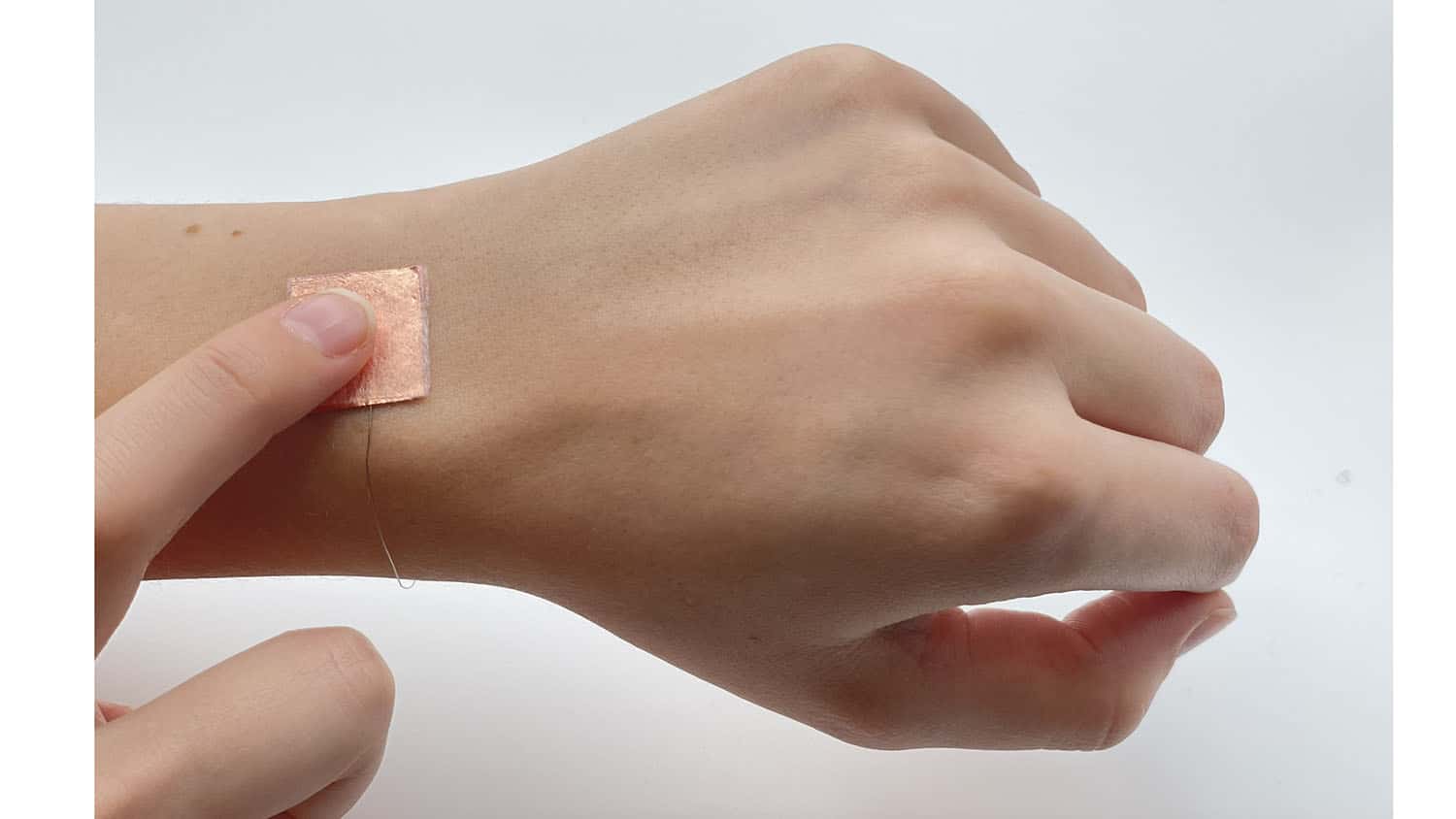
What if you could charge your phone just from the friction of your pocket — and that the energy generated could make your clothes more comfortable?
An interdisciplinary research team is developing advanced textiles by exploring the potential for generating energy through movement.
Led by NC State faculty and biomolecular engineers Lilian Hsiao and Saad Khan, the team studied how amphiphiles — materials often used in consumer products to reduce friction against human skin — can also generate electricity from friction caused by movement.
“Specifically, we wanted to know if we could create energy from friction in amphiphile-modified materials,” says Khan.
The experiments successfully demonstrated that amphiphile-modified materials could not only generate electricity from friction but also harvest impressive amounts of energy.
In proof-of-concept testing, the materials were found to generate up to 300 volts, which was described as remarkable for a small piece of material. The technology also holds the potential to become more comfortable for a person to wear.
“It turns out we could not only generate electricity, but we could do so while also reducing the friction that people wearing these materials experience,” says Khan.
Morphing “Chinese Lantern” Structures for Robotics

These eye-catching structures may look like a toy or decoration.
Yet, polymers cut into the shape of “Chinese lanterns” hold the energetic potential to snap into more than a dozen curved, three-dimensional shapes by compressing or twisting the original structure. By manipulating a magnetic field with a remote control, researchers in the area of soft robotics are exploring the polymer’s ability to rapidly shape-shift — a behavior that could be useful for a variety of applications.

The polymer structure is created by twisting a parallelogram-shaped polymer sheet with ribbon-like cuts along its middle. It’s also bistable, which means it has two stable forms. One form is its lantern shape, and the other is created by pushing down from the top, causing it to slowly deform until it snaps into a second stable shape that resembles a spinning top.
“In the spinning-top shape, the structure has stored all of the energy you used to compress it, says Jie Yin, the research lead and a professor of mechanical and aerospace engineering at NC State. “So, once you begin to pull up on the structure, you will reach a point where all of that energy is released at once, causing it to snap back into the lantern shape very quickly.”
“Moving forward, these lantern units can be assembled into 2D and 3D architectures for broad applications in shape-morphing mechanical metamaterials and robotics,” says Yin. His team created a YouTube video showing these structures snapping into a tool that can grasp a tiny fish or stop the flow of water.
Innovating Manufacturing with Self-Assembling Electronics
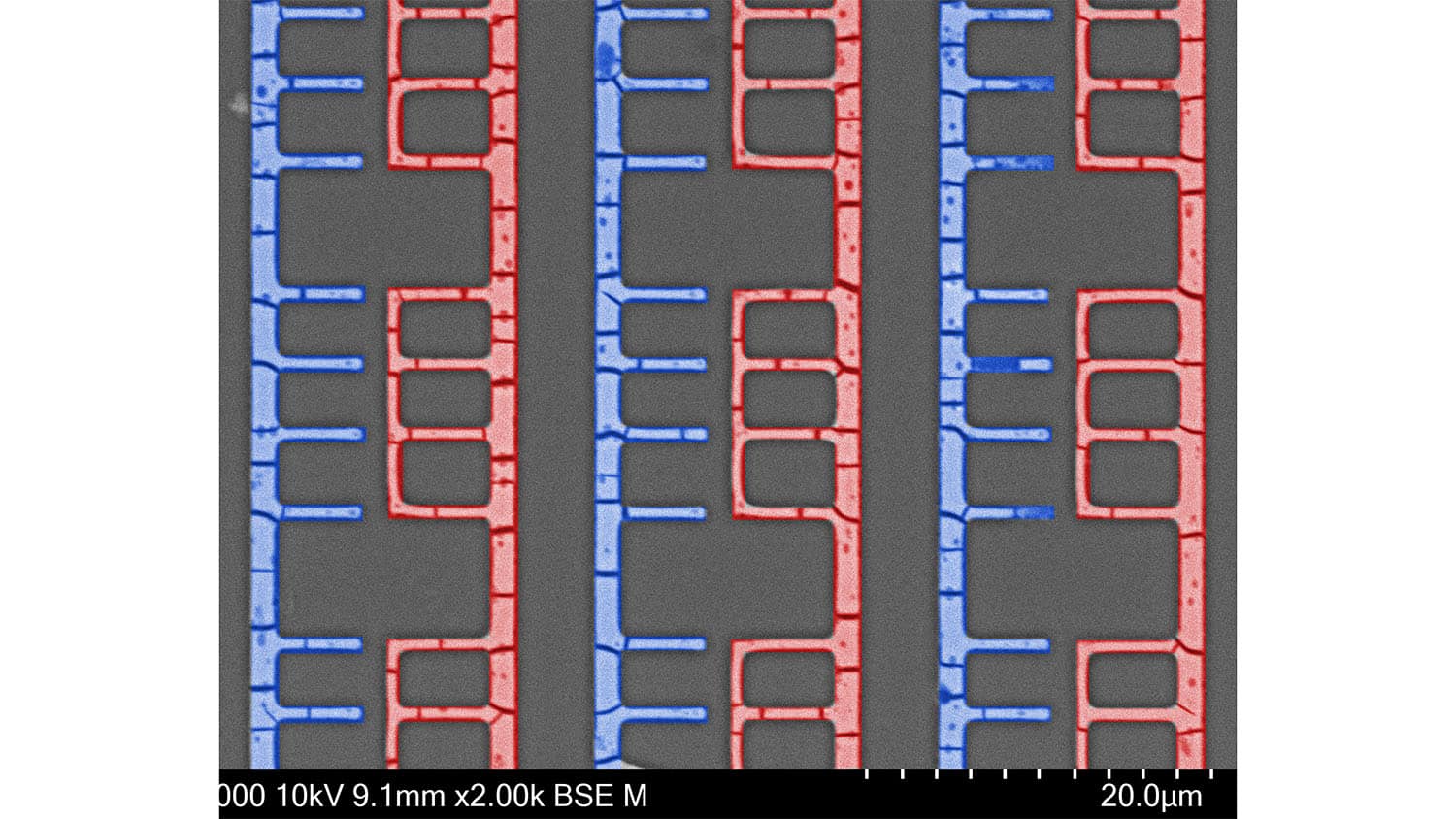
Liquid metal particles hold the potential for self-assembling electronic devices. This novel technique could also make computer chip manufacturing quicker and more affordable.
Research led by Martin Thuo, a researcher and professor of materials science and engineering at NC State, demonstrates how a technique called a directed metal-ligand (D-Met) reaction can create diodes and transistors.
The process begins with tiny liquid metal drops placed next to a patterned mold. Next, a solution containing carbon and oxygen molecules is poured over the metal and drawn into the mold. These molecules then automatically gather and organize themselves into complex patterns determined by the mold.
Once the mold is removed, the structured pattern is heated, breaking apart the molecules and allowing the metal and oxygen atoms to combine. This reaction forms new semiconductor metal material.
Current manufacturing techniques yield low production rates, resulting in a high number of unusable chips.
“Our self-assembling approach is significantly faster and less expensive,” Thuo says. “Our approach is high yield — meaning you get more consistent production of arrays and less waste.”
The diodes and transistors are nanoscale and microscale electronic devices that can be useful for developing the technology further.
“The next step is to use this technique to make more complex devices, such as three-dimensional chips,” says Thuo.
Origami Robots for Medicine

Researchers are exploring a method to deliver medicine using soft, flexible magnets adhered to an origami robot.
An actuator is a mechanical device used in engineering to perform a specific task. A research team used a 3D printer to create a soft and highly flexible magnetic film actuator by infusing rubber-like elastomers with ferromagnetic particles. The film is then adhered to a folded paper origami structure that serves as both a skeleton and a carrier of medicine.
The origami pattern is called miura-ori — a folding pattern that enables the actuator to be compactly folded into a size small enough to fit into a gelatin capsule for oral ingestion.
The research team created a simplified mock stomach for simulating the treatment of an ulcer. Once moisture dissolves the capsule, the origami structure unfolds. Controlled by wireless magnets, the actuator responds like a muscle, animating the paper structure to move to the ulcer location and deliver the medicine.
Most magnets are rigid. The flexibility of the 3D-printed actuator magnetic film allows it to be adhered to the origami structure without hindering its unfolding or movement, says Xiaomeng Fang, the lead researcher of an interdisciplinary team and an assistant professor at NC State’s Wilson College of Textiles.
“With this technique, we can print a thin film which we can place directly onto the important parts of the origami robot without reducing its surface area much,” says Fang.
Bioinspired Thermoplastic Repairs Itself
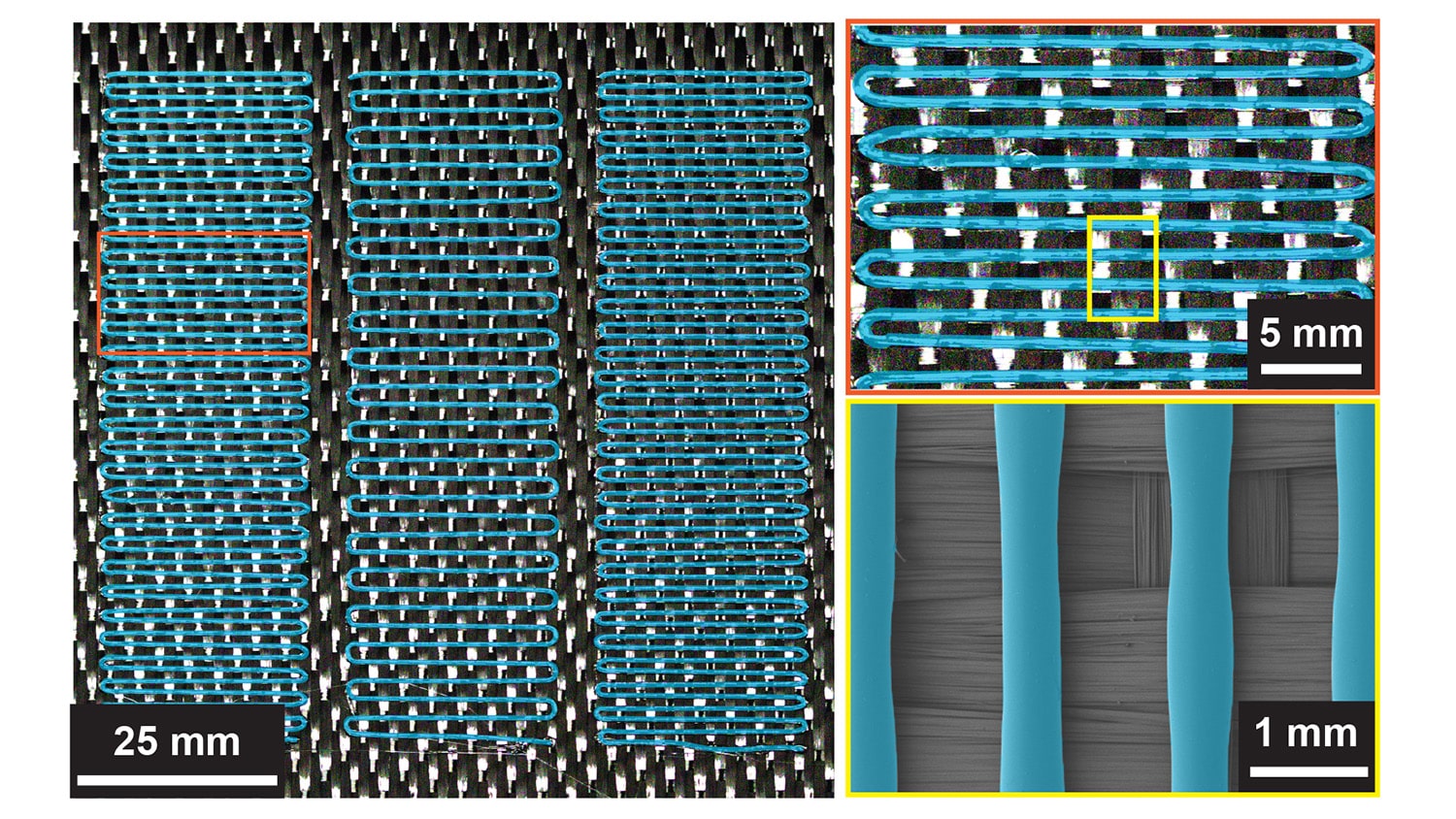
Engineering often draws inspiration from nature. In exploring self-repairing materials for airplane wings and sporting goods, researchers looked at how our skin heals from minor cuts.
A variety of self-healing materials have been developed, but existing strategies face two key limitations. First, they often require the component to be taken out of service for healing, which presents logistical challenges for large parts or those currently in use. Second, self-repairability diminishes significantly after a few healing cycles, limiting the material’s lifetime durability.
“We’ve come up with an approach that addresses both of those challenges in a meaningful way, while retaining the strength and other performance characteristics of structural fiber-composites,” says Jason Patrick, the research lead and an assistant professor of civil, construction and environmental engineering at NC State.
The team has innovated reinforcement materials by weaving in a 3D-printed patterned thermoplastic healing agent. Thin, embedded heating layers are also part of the composite, which, when subjected to an electrical current, warm up. The healing agent then repairs damage to the composite by melting and flowing into cracks and microstructures.
“We’ve found that this process can be repeated at least 100 times while maintaining the effectiveness of the self-healing,” Patrick says. “We don’t know what the upper limit is, if there is one.”

- Categories:


