Making the Most of Multifunctional Materials
In NC State's Department of Mechanical and Aerospace Engineering, researchers are pushing the limits of advanced ceramic materials. The fundamental research has received early-stage support for its potential national defense and security applications — but historically, many military technologies have led to revolutionary civilian products.

Many technologies that modern society depends on were first developed with a military or defense application in mind.
The internet’s arguably the most influential example, which can be traced directly to ARPANET — a computer-to-computer network developed by what’s now known as the Defense Advanced Research Projects Agency (DARPA).
ARPANET initially connected a handful of universities and secure research facilities across the U.S. before quickly evolving and expanding to include military bases, government labs and other partner organizations.
Another now-ubiquitous technology that first achieved widespread adoption as a military application is FM radio — which took off in post-WWII America.
For most people behind the wheel today, though, it’s not their radio but rather the GPS that’s probably the closest second to the internet in terms of impact on daily life; after all, can you even remember the last time you used a paper map to find your way around?
Defense-related applications tend to drive innovation for a few reasons. For one, they often demand more.
Take an airplane wing, for instance; the wings of a fighter jet need to withstand much higher temperatures than the wings of a commercial airliner, since the fighter jet flies significantly faster.
“Defense applications often push performance boundaries because they demand materials and systems that can operate under especially severe conditions,” says Cheryl Xu, a professor of mechanical and aerospace engineering at NC State University. “Certain high-speed military aircraft experience substantially greater aerothermal loading than commercial airliners, placing more demanding requirements on their structural and functional materials.”
Xu has a keen understanding of exactly what makes defense- and security-related applications different from the rest. She’s spent the better part of her career working on research projects funded by the Air Force Office of Scientific Research, Army Research Office, Office of Naval Research, NASA and other government agencies — along with leading defense contractors like General Dynamics as well as several small businesses.

A recognized expert in advanced manufacturing, multifunctional materials, high-temperature wireless sensing and AI-enabled manufacturing technologies, Xu’s primary research focus is on multifunctional ceramic materials — and how to manufacture them for high-temperature applications and environments.
Xu’s fundamental research has led to breakthroughs in ceramics engineering that could open the door to manufacturing next-generation stealth aircraft and naval ships, as well as many potential civilian applications, such as energy production and space exploration.
What Ceramics Can Do
When you think of ceramics, what comes to mind? You probably picture porcelain, or perhaps a piece of pottery.
And while humans have, indeed, long used ceramic materials to craft dishware, decor, and countless other tools and objects, ceramics can do much more than merely hold liquids or become molded into sculptures.
Scientists figured that out more than a century ago, at least.
In 1880, a pair of French physicists discovered piezoelectricity — the ability of crystals and certain ceramics to generate electricity when put under pressure.
It wasn’t until WWI, though, that someone found the first application for the piezoelectric effect beyond the lab bench, or at least the first application that offered a solution to what was then a pressing problem.
During the war, enemy submarines and underwater mines took a heavy toll on Allied ships. Searching for a better way to detect these dangers lurking in the depths, physicist Paul Langevin partnered with a Russian engineer.
Leveraging the piezoelectric effect discovered by his fellow Frenchmen some four decades earlier, Langevin and his partner built an echo-ranging system that produced electrical sound waves by pressing a piece of quartz between two steel plates. That system would become the backbone of sonar devices still in use today.
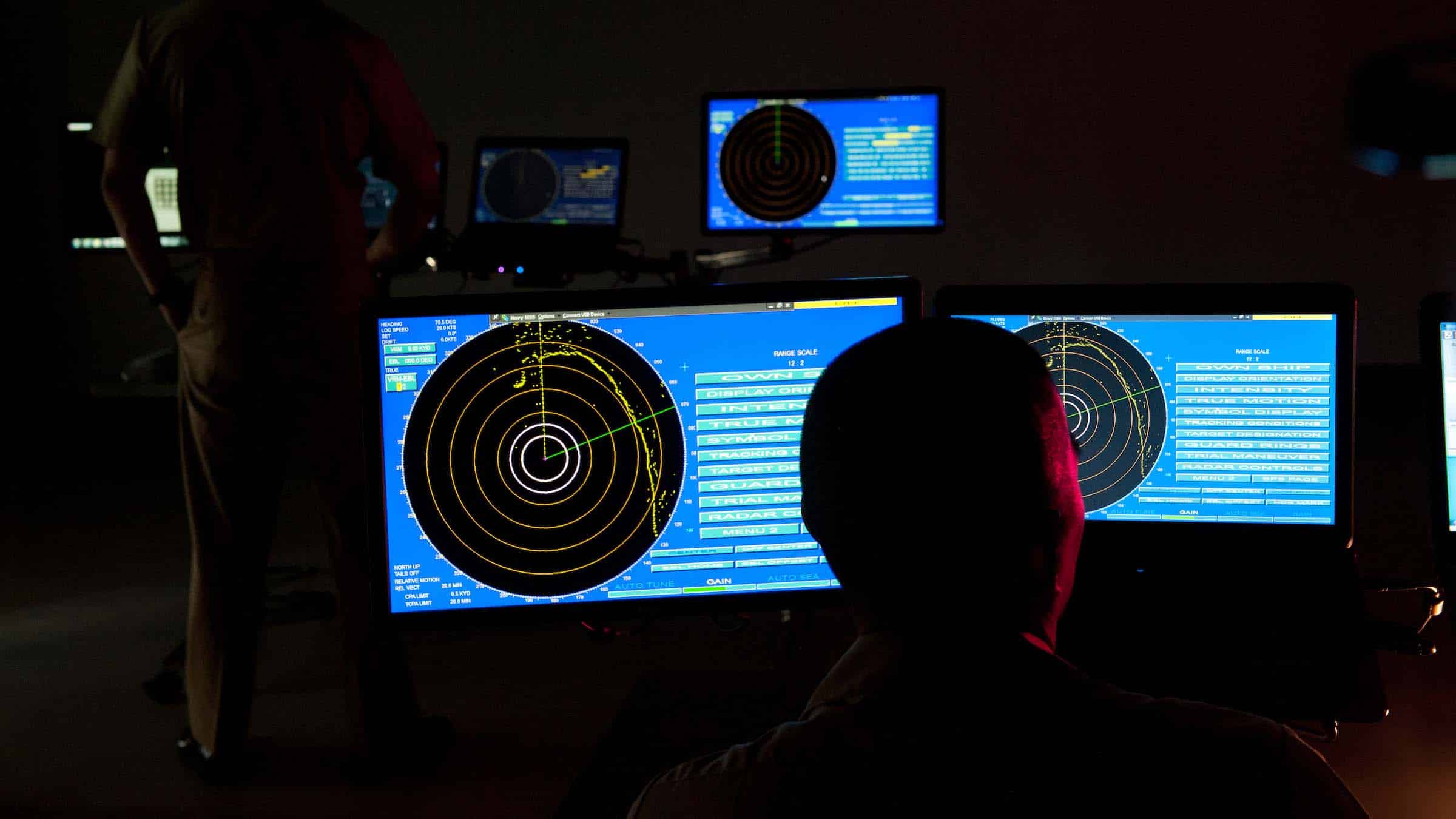
Since the invention of sonar, many different applications for both crystals and ceramic materials have been discovered.
And NC State has been at the forefront of research and innovation in the ceramics field from the start. Founded in 1923, our university’s ceramic engineering department — now known as the Department of Materials Science and Engineering — was the first of its kind in the American South.
How Xu Got Here
Xu joined NC State in 2018, following stops at Florida State University and the University of Central Florida. She spent a little over five years at FSU after starting out at UCF, where Xu got her “first job” as a professor. Xu first came to the U.S. for her doctorate at Purdue University, where she completed her Ph.D. in mechanical engineering in 2006.
When she was ready for a new opportunity outside the Sunshine State, it was NC State’s reputation and research infrastructure that attracted Xu to an opening in the Department of Mechanical and Aerospace Engineering. She specifically mentioned the Center for Additive Manufacturing and Logistics (CAMAL) — home since 2003 to one of the world’s first commercial Electron Beam Melting machines, which CAMAL has long used to 3D-print metal parts.

Xu was elected a Fellow of the American Society of Mechanical Engineers for her contributions to the field in 2020. Since then, she has continued to push the boundaries of multifunctional ceramic materials, not only in terms of what they can do but also in how they’re both made and physically applied.
Pairing Ceramics With Other Materials
Many ceramics can retain useful properties at temperatures as hot as 3,000 degrees Fahrenheit, depending on their composition, operating environment and intended function. But when paired with other materials, ceramics can become even tougher.
“Monolithic ceramics can offer exceptional strength, hardness, chemical stability and resistance to high temperatures,” Xu explains. “However, many are inherently brittle and have limited fracture toughness.”
A coffee mug, for example, is quite fragile.
“But by introducing a reinforcing phase — such as fibers, particles or engineered microstructures — researchers can improve toughness, damage tolerance and other functional properties,” Xu says.
In 2021, Xu secured funding from the Air Force Office of Scientific Research to further develop a radar-absorbent ceramic coating, which could eventually replace the existing polymers used to cloak stealth aircraft.
Xu’s new ceramic material offers two major advantages: It’s tougher and can last longer. More specifically, it can better withstand moisture and salt or other abrasive materials — and the ceramic coating can survive much higher temperatures. The latter could potentially allow manufacturers to rethink stealth aircraft design entirely.
Conventional radar-absorbent coatings, which are largely polymer-based, typically start to break down at 250 degrees Celsius. That’s a pretty big problem when the leading edges of aircraft wings — let alone their jet exhausts — reach temperatures well in excess of 250 C. Right now, that means stealth aircraft are designed with workarounds that effectively limit speed and maneuverability.
But since the new ceramic coating is tough enough to survive these extreme temperatures, it could potentially be applied across a much larger portion of the aircraft — even near the exhaust system.

With further development, the ceramic coating could expand the design options available for a range of high-temperature aerospace applications.
“We are interested in working with industry partners to evaluate how these materials could be manufactured at scale and integrated into future aerospace platforms,” Xu says.
Manufacturing Innovation
In May 2025, Xu served as the co-corresponding author of a research paper demonstrating a new technique that uses lasers to create ceramics that can withstand ultra-high temperatures.
Published in the Journal of the American Ceramic Society, the paper “Synthesis of Hafnium Carbide (HfC) via One-Step Selective Laser Reaction Pyrolysis from Liquid Polymer Precursor,” demonstrates the potential advantages their new technique could offer in comparison to conventional furnace processing.
The paper also covers how their new technique can be integrated with additive manufacturing — more commonly known as 3D printing. Specifically, the new selective laser reaction pyrolysis technique can be used with a 3D-printing method similar to stereolithography.
“There are a few ways to 3D-print ceramics as is,” says Luke Joyce, a fourth-year Ph.D. student in Xu’s research lab.
As it stands, Joyce says stereolithography is “mostly used for oxide ceramics.” Dental crowns, for instance, are now commonly made this way — mixing zirconia powder with a resin that instantly hardens when exposed to UV light.
Joyce knows much more about 3D printing than most. What started as a high-school hobby ended up helping him earn a funded position as a doctoral candidate in Xu’s lab. Joyce had already worked in Xu’s lab as an undergraduate, and when it came time for graduation, he says that Xu was looking for someone with 3D-printing experience.
“At that point, I’d already tinkered with one for years. I got one back in high school and had always been interested in it,” Joyce says.

His undergraduate research work didn’t exactly align with what he’s studying now for his Ph.D., but Joyce is nonetheless grateful for the experience he gained. Joyce says he gained hands-on experience setting up experiments and got the chance to “interface with the lab, talk with a postdoc, and get exposed to all the fancy equipment,” in a relatively low-pressure environment.
For his Ph.D., Joyce is concentrating on “new 3D-printing techniques for ceramics.”
“The idea is we want to be able to make useful parts with all the applications you get with ceramics, but also try to do it in new ways and new shapes so you can unlock more manufacturing potential,” Joyce says. “With 3D printing, you can make stuff in shapes you just couldn’t make otherwise. And with ceramics, you’ve got a lot of properties that are really useful for a lot of areas.”
His research is similar to — but separate from — the selective laser reaction pyrolysis technique demonstrated in the May 2025 paper. Rather than lasers, Joyce’s research focuses on using high-power electron beams to fabricate materials.
Electron-beam powder bed fusion is currently used in metal 3D printing to make parts like turbine blades, a great example of equipment that could stand to benefit from the properties of advanced ceramics if researchers like Joyce can help develop the requisite manufacturing methods.
“Right now, there are a lot of areas where you can make existing designs work a lot better if you could run stuff hotter, run stuff faster,” Joyce says.

Putting the Pieces Together
Joyce currently plans to complete his Ph.D. this December. He’s far from the average student in many ways — except one, at least. He isn’t completely sure what he wants to do when he graduates.
While he’s fascinated by the theoretical potential of his doctoral research, Joyce says he wouldn’t mind transitioning to more of the development side of R&D.
“I’m a big tinkerer,” Joyce says. “I miss the hands-on engineering bits, so I wouldn’t be sad about working in something that’s more straight-up industry.”
As a fellow engineer herself, Xu can relate.
“My major was engineering, so I like physics, but I would like to see how my research can be used for an actual product,” Xu says.
Granted, she also recognizes that when it comes to research with potential military applications, national security must be the number one priority. That means university researchers often don’t get to see how their fundamental findings ultimately become incorporated into operational systems.
“Our role is to establish the fundamental science, demonstrate the technology and work with partners on translation and scale-up. In many cases, researchers do not have direct visibility into every downstream application,” Xu says.
That said, Xu’s research findings certainly haven’t stayed confined to the lab bench.
With 15 U.S. and international patents to her name, Xu was named a fellow of the National Academy of Inventors (NAI) in 2025. NAI Fellowship is the highest professional distinction that the academy awards solely to inventors.

Military applications might pave the way to commercialization at first, but Xu’s findings could ultimately support a much broader spectrum of industry sectors in the civilian market.
“This is fundamental research, not only for defense but also for civilian applications,” Xu says.
Many civilian applications for multifunctional ceramics might not even be imaginable yet. But one application that’s easy to envision is nuclear energy. Nuclear reactors require materials that can maintain their structural and functional properties under combinations of extreme heat, radiation, corrosion and other harsh conditions.
For now, Xu will have to wait and see. It won’t take nearly as long, however, for her to find out where Joyce lands after graduation.
Past alumni of Xu’s have gone on to careers ranging from faculty at universities around the globe, to roles with leading tech companies like Google, to Lockheed Martin and other aerospace and defense companies.
No matter where Joyce ends up, one thing is certain. Xu will be proud.
“Because we work at a university, research is part of our mission. But education is also dear to my heart,” Xu says. “My ‘kids,’ if they land a good job, I feel very proud of them.”


