A New Era for the Energy Grid
With federal support and cross-state collaboration, a student and faculty team in the Electrical and Computer Engineering Department demonstrated that solid state transformers can effectively distribute power across a grid, advancing the future of electrical infrastructure.
Last June, a shipping container took a trip from the electrical and computer engineering lab at NC State University to Lenox, Massachusetts. With it went an intrepid group of Ph.D. students led by principal investigator and faculty member Srdjan Lukic.
Inside that 20-foot gray box was a solid state transformer (SST) — and what represents an almost two-decade effort to upgrade the nation’s century-old electrical infrastructure. This hull of wires, coils, semiconductors and advanced circuitry represented, in other words, the electrical grid of the future.
Following rigorous testing and a trip north, the research team hooked up the SST to the energy grid in Lenox, where the Electric Power Research Institute has testing grounds. So far, it has proven capable of handling up to one megawatt of power under real-world conditions — enough electricity to power about 600 homes.
“This is the first independently verified, megawatt-class solid state transformer validated on a live utility distribution feeder,” said Srdjan Lukic, principal investigator on the SST project and Lampe Distinguished Professor of Electrical and Computer Engineering at NC State.
“This is a significant step in advancing power transformer technology.”
The Energy Internet

In 2008, the National Science Foundation chose NC State to head an effort to modernize the electrical power grid, leading to the formation of the Future Renewable Electric Energy Delivery and Management (FREEDM) Systems Engineering Research Center.
“The vision was to reimagine how we deliver power. Can we design the internet for energy?” said Lukic, who was the first faculty hired when the FREEDM research center was established.
“Essentially, the concept of the internet — or how we use our computers — would be applied to the grid, where if I plug anything into the grid, the grid recognizes it and uses those resources in an optimized way.”
Acting like a kind of “energy router,” the SST they developed could provide electrical power more efficiently and cost-effectively.
Alternating Current (AC)
Alternating Current is an electric charge that periodically changes direction. It is standard for powering homes and long-distance transmission.
Direct Current (DC)
Direct Current (DC) is an electric charge that flows steadily in a single, constant direction and is used in batteries, smartphones and laptops.
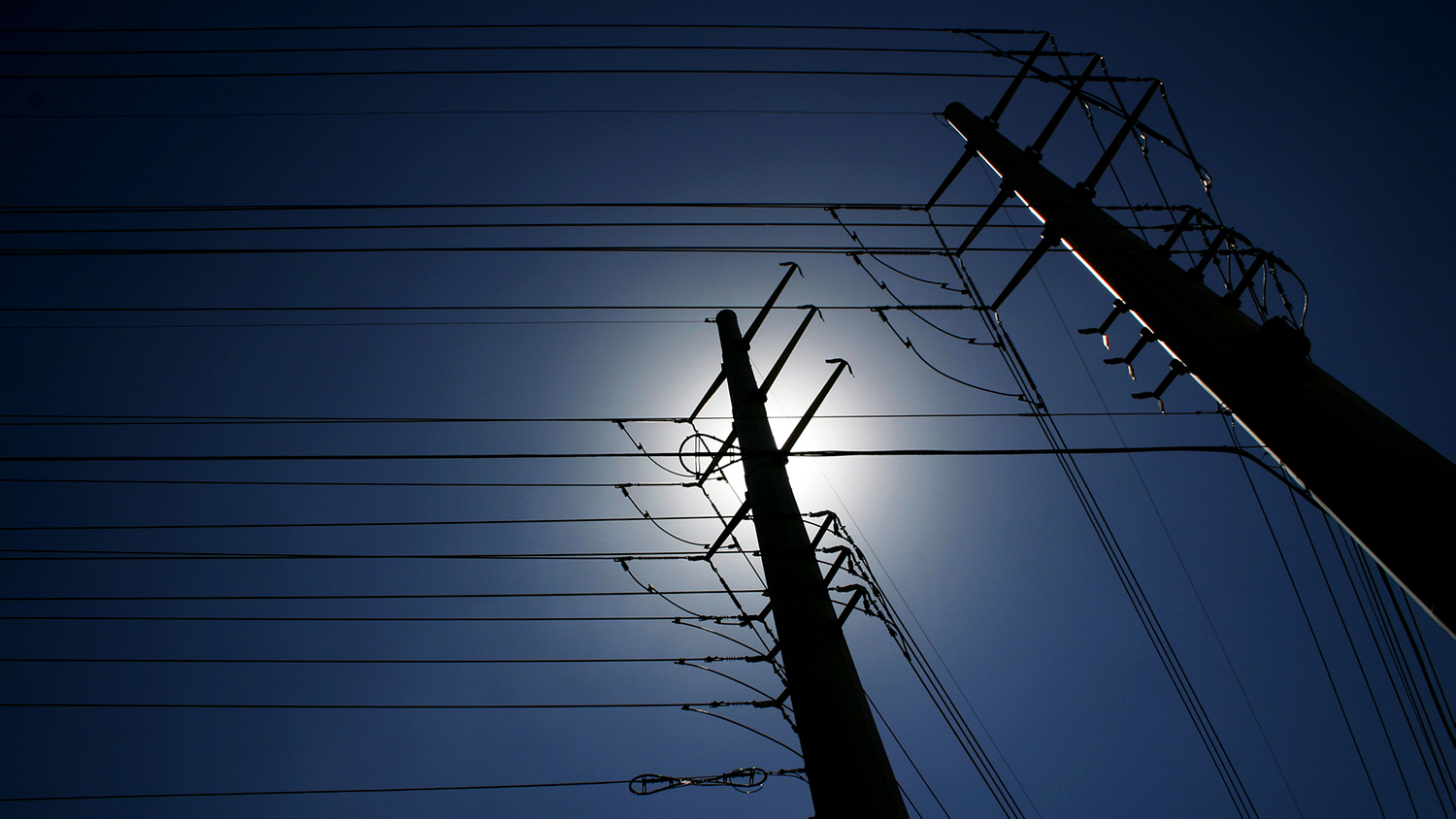
The backbone of the United States’ existing power grid has long been alternating current (AC). Power generators using large turbines account for 80% of the electricity generated in the U.S. and deliver high-voltage AC using tall suspension towers and long-distance cables. That infrastructure feeds into the electricity poles that line our streets and roads, using low-frequency transformers.
From there, getting electricity from the transformers outdoors to run through the electrical sockets in our homes requires three different components to safely power many modern devices that run on direct current (DC).
Looking at a Tesla Supercharger, for example, it’s easy to see the different components necessary to convert AC into DC — and the sheer bulkiness of the traditional transformer itself.
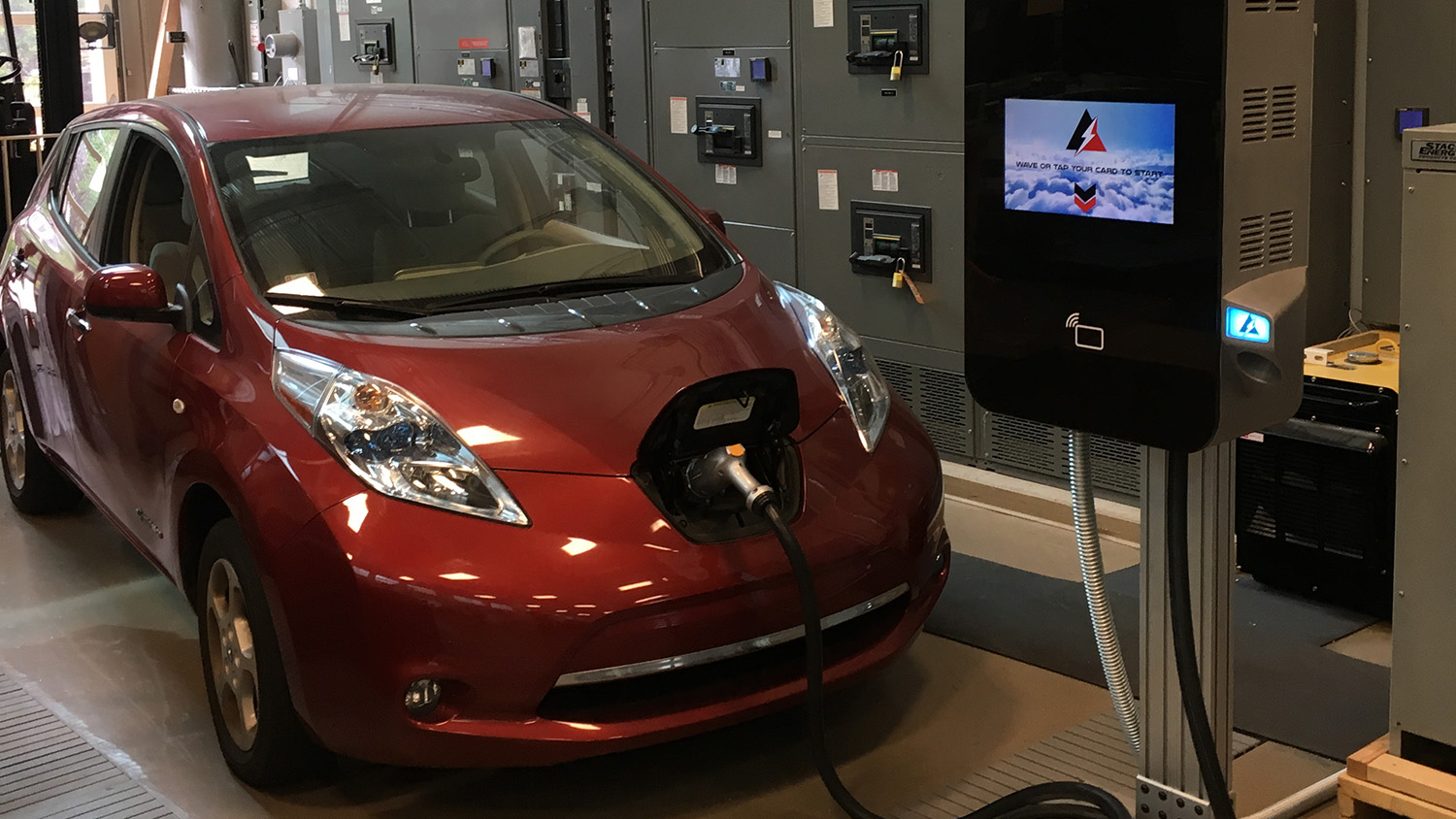
“You’ll see one big box, which is the transformer; another big box, which is the switchgear; and then a third box, which is this rectifier piece — all hidden behind a fence or in a building. So the device that you use to plug into your vehicle — that’s not what I’m talking about. I’m talking about the structure [housing the transformer] behind the charger, which is quite large.”
The SST takes all three of these components and puts them into a single box. It saves space, which is an asset in dense, urban locations. For data centers, SSTs can reduce their footprint while also maximizing their energy efficiency.
“[The grid] is a very old technology that uses a lot of raw materials — a lot of copper and steel … Both of these materials are in short supply, and their costs are going up.”
For Lukic’s team, getting SSTs deployed to electric vehicle charging stations and data centers is the first step to a broader goal: shifting energy infrastructure to a place where we receive both AC and DC service in our homes and businesses.
Current economic concerns might push our energy grid towards DC sooner rather than later. The nation’s AC-dependent system has been in operation for nearly 130 years, but rising costs make a shift toward developing DC infrastructure appealing.
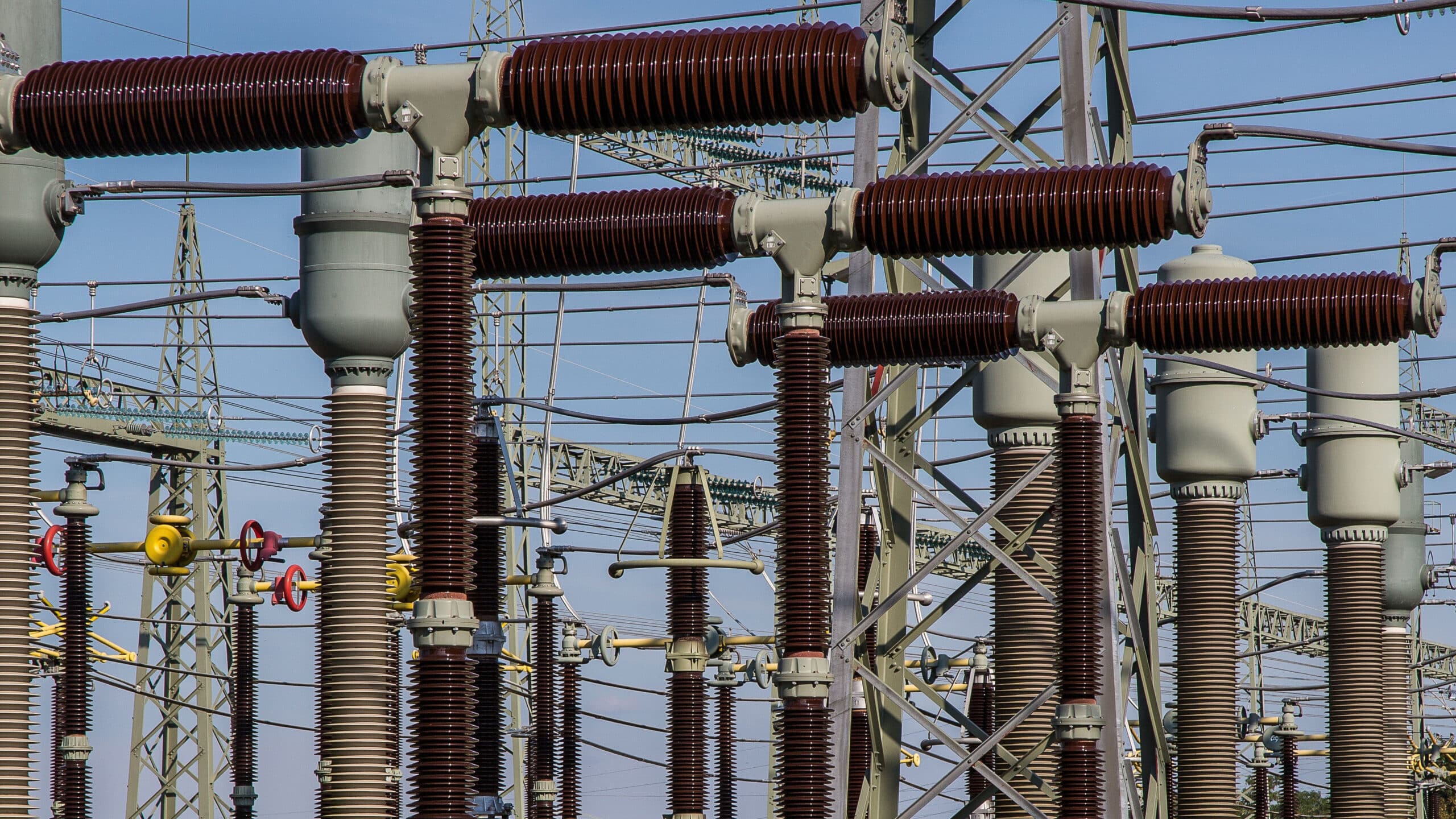
“[The AC grid] is a very old technology that uses a lot of raw materials — a lot of copper and steel — which from a resource point of view has been a major issue these days. Both of these materials are in short supply, and their costs are going up,” explained Lukic.
Laptops, smartphones, LEDs, solar panels and many other electronic devices already operate on DC power; incorporating SSTs into our grid would simplify how we power them. In turn, that could make these products longer-lasting and more affordable.
“Most of your appliances would be more efficient if you plugged them into a DC outlet rather than an AC outlet. Your HVAC, the biggest load in the home, would be significantly more efficient if it were designed to be powered with DC.”
A Solid State Transformation
A traditional transformer has a wire on the high voltage side, a wire on the low voltage side and a magnetic core. A solid state transformer adds solid state switches on both high- and low-voltage sides, allowing operation of the magnetic core at a thousand times higher frequency — and dramatically shrink its size.
As for the “energy internet,” practically this would mean we would have outlets for AC appliances and DC devices, the latter of which would look like a USB port, Lukic said.
“Currently, our two-prong and three-prong plugs are all AC. The plug that’s DC today is USB-C, which can power a computer or TV, but not a washing machine. Our goal is to have a slightly larger USB-C plug that can more efficiently power your washing machine.”
An Electrifying Student Experience

The development of the SST represents not only the next generation of the electrical grid, but also the next generation of electrical and computer engineers.
For a newly minted engineer, it’s typical to start working in the utilities sector with a very large team — and carry responsibility for only a tiny portion of operations.
But working alongside Lukic — backed by federal and cross-state support — these electrical and computer engineering Ph.D. students gained a hands-on opportunity to help shape the future of electrical grid technology.
The U.S. Department of Energy funded the development of the initial SST prototype. Funding from the New York Power Authority (NYPA) made it possible for the student engineering team to move from concept and design to evaluating the prototype with dangerous voltage levels at an NC State lab, and finally to deployment for testing in the field.
“The fact that NYPA gave us this opportunity is really exciting,” Lukic said.

The SST prototype was shipped north and sat for about three months while the Electric Power Research Institute (EPRI) — a collaborating partner with a testing facility in Lenox, Massachusetts — built the infrastructure to test it. In mid-June, Lukic and the students traveled to Lenox and connected the SST to the power grid. Then, supervised by EPRI, they turned it on — a high-stakes moment where potential issues would impact local power delivery to neighboring homes and businesses.
Nervously, the engineering team watched as the SST they developed successfully supplied power downstream to customers.
“Given that it’s a power electronics device filled with semiconductor devices where if one thing fails, nothing works, we were pleasantly surprised at how few kinks there were,” said Lukic.
The test proved for the first time that the SST prototype could serve a live utility distribution feeder — and showed the student team that they are pioneering technology that will likely help redefine the electrical grid’s future.
“The exciting thing was seeing our Ph.D. students build something cutting-edge and deploy it on the distribution grid,” said Lukic.