Jan 27, 2022
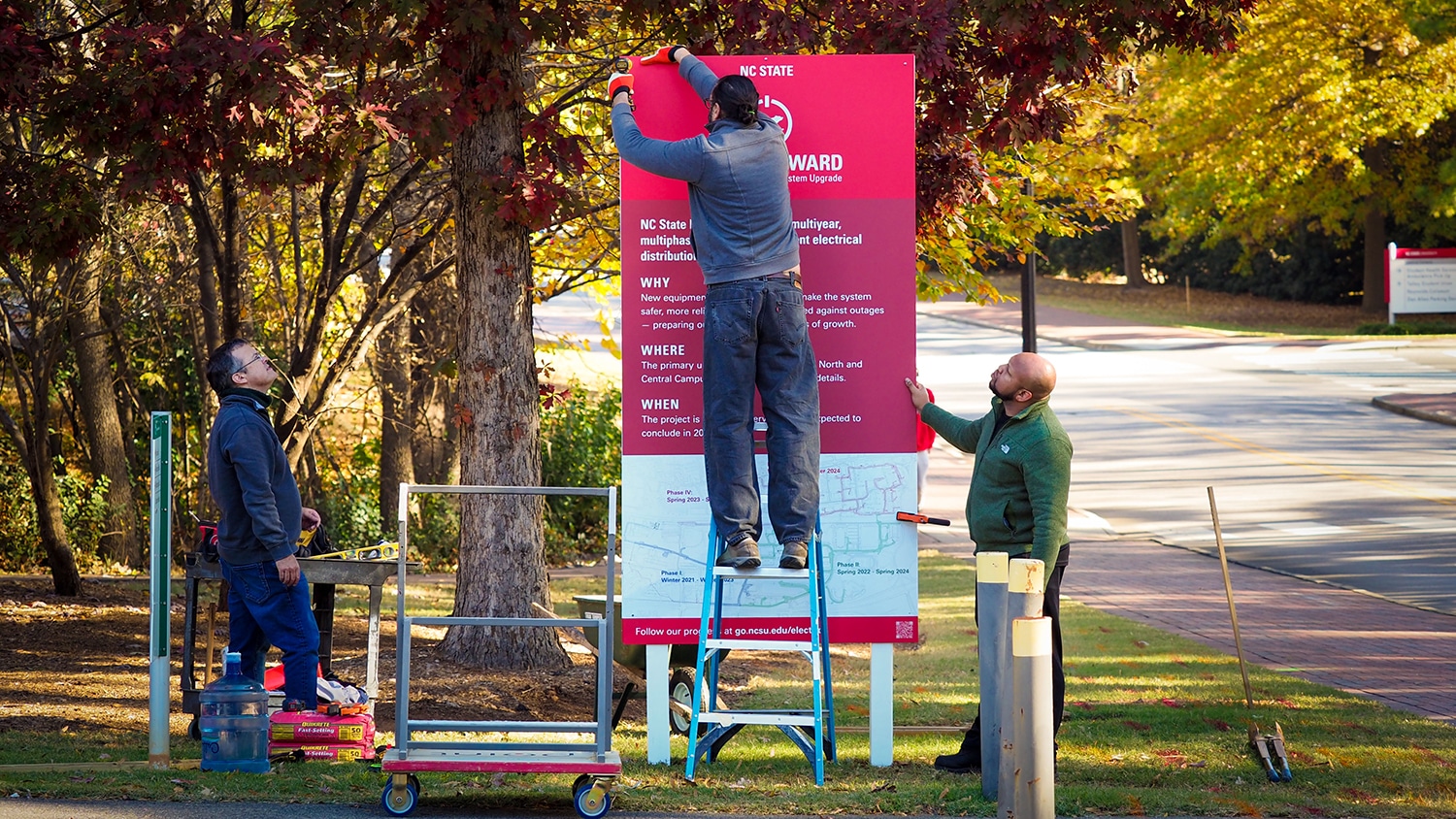
A four-year, $60 million electrical distribution system upgrade to NC State's electrical grid will ensure the power efficiency, reliability and stability that are key to expanding the university's growth.
Nov 17, 2021
Billy Williams, director of NC State’s Institute for Transportation Research and Education and a professor of civil, construction, and environmental engineering, can speak to issues associated with transportation and transportation infrastructure in North Carolina. Williams can be reached at billy_williams@ncsu.edu or 919.515.7813. Jason Coupet is an associate professor of public administration. He has expertise in the administrative challenges associated with implementing…
Jan 21, 2020
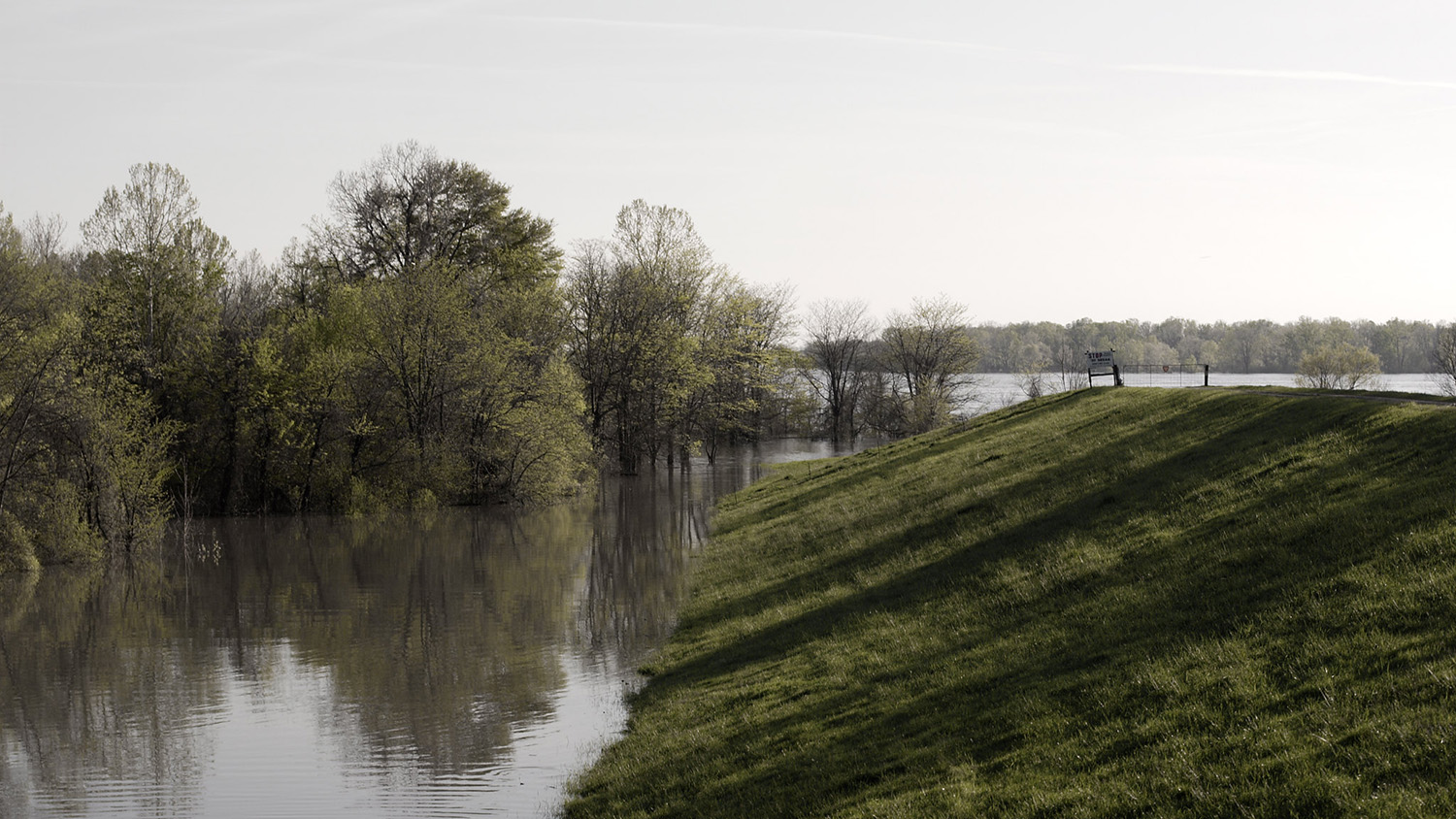
Repeated flooding has a cumulative effect on the integrity of earthen levees, suggesting that extreme weather associated with climate change could pose significant risks for the nation’s aging levees.
Jun 5, 2019
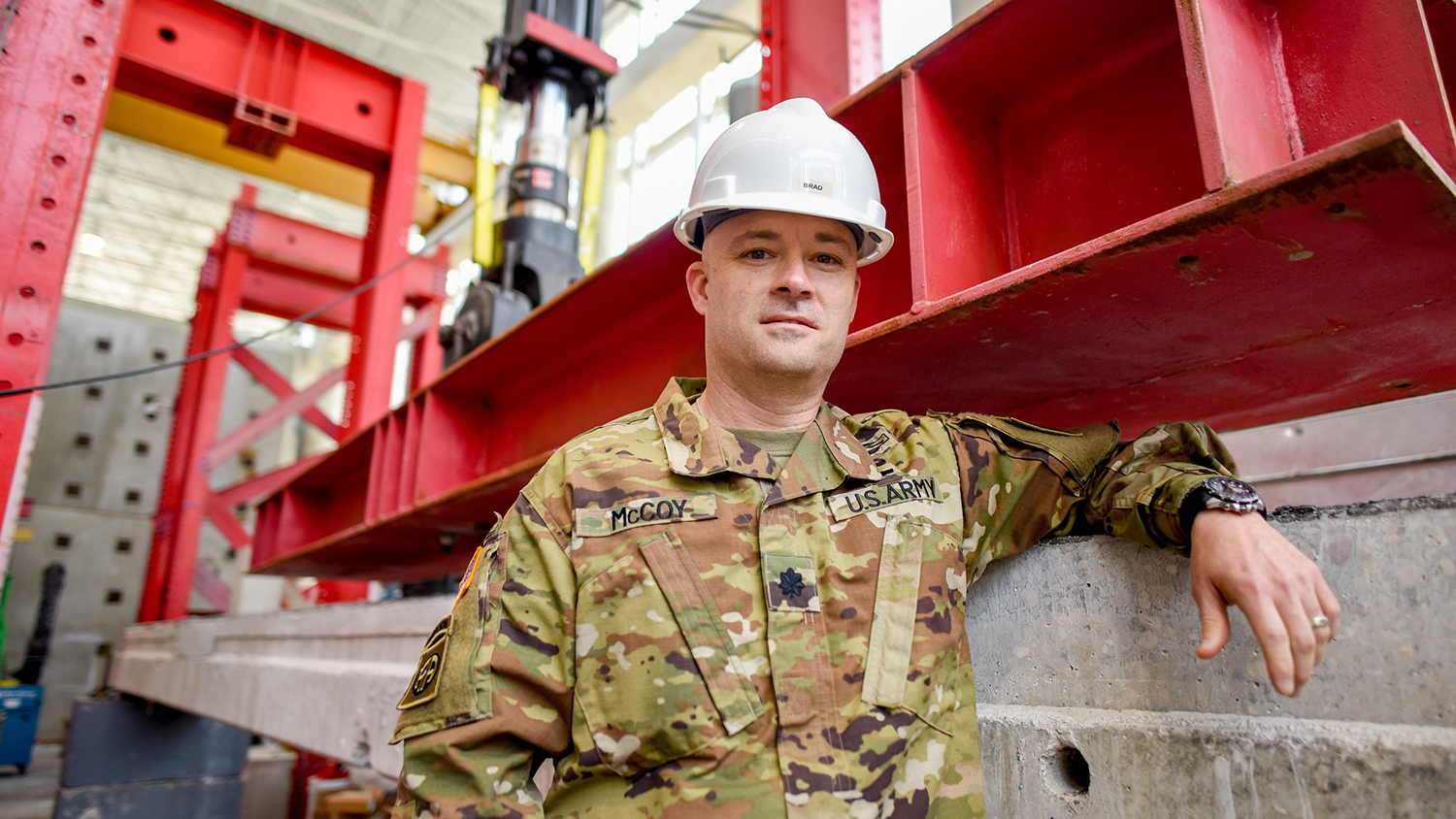
Bridges across our state are in rough shape, but NC State alumnus Brad McCoy has developed a solution to give them new life — and keep us safely on the road.
Jun 24, 2015
Researchers have developed a new technique for “scheduling” energy in electric grids that advances the smart grid concept by coordinating the energy being produced and stored by conventional and renewable sources.
Oct 31, 2014
At the Constructed Facilities Lab, success is failure. By creating material failures in key pieces of infrastructures, researchers prevent them from occurring in real life.
Aug 9, 2012
A team of researchers from four U.S. universities is poised to lay out the key components for a networking architecture to serve as the backbone of a new Internet that gives users more choices about which services they use. The National Science Foundation (NSF) asked the researchers to design a blueprint for a future version…
Jun 21, 2012
Editor’s Note: This is a guest post by NC State grad student Tate Rogers. Rogers came up with an idea to address the life-threatening challenge of human waste disposal in the developing world, and was part of a team that received funding from the Bill and Melinda Gates Foundation to pursue the idea further. Rogers will…
Nov 15, 2011
Conventional sewage treatment is not available in many parts of the world, and disposing of human waste can be both difficult and hazardous in developing nations. So a team of researchers from NC State, with support from Grand Challenges Explorations, an initiative of the Bill & Melinda Gates Foundation, are pursuing a new approach to an…
Oct 31, 2011
Sometimes a picture can save time and money — and that’s worth more than a thousand words. From mitigating flood damage to managing water resources during a drought, tracking water flow is important. But tough budget times make maintaining data collection systems more difficult than ever. Researchers may have found a way to ease…
Jul 12, 2011
Each level of a parking garage is held up by a structure called an L-shaped spandrel beam. For years, manufacturers have been making these beams using inefficient assumptions, which meant they were using too much steel and putting it in the wrong places. Researchers have now collected actual data on these structures, allowing them to…
Jun 21, 2011
We are always surrounded by things we don’t really understand, but there are few man-made substances as common, but little understood, as concrete. We walk on it, drive on it and live in buildings built on it (or even from it). And, while most people hardly ever think about it, there are researchers who think…
Jun 16, 2011
I love it when someone comes up with an ingenious solution to a problem, like the self-healing sensor discussed in a paper that came out this month. I won’t go into the entire sensor, but want to explain the “self-healing” part, since that’s what I think is so clever. (The paper itself is here and…
Nov 15, 2010
If the 1970s version of Battlestar Galactica had included water cannons, they would probably have looked like the ISEP (In situ Scour Evaluation Probe). But, unlike Battlestar Galactica props, the ISEP can save lives, and money, by helping to maintain the safety of key infrastructure such as bridges and dams. At issue is something called…